UPSC Key Insights for January 17, 2026: Strategic Dialogues and Legal Reforms
UPSC aspirants must focus on several critical developments from January 17, 2026. These topics hold significant relevance for both the Preliminary and Mains examinations. The day featured major diplomatic engagements, judicial observations, and economic updates.
India and Japan Strengthen Ties with New Initiatives
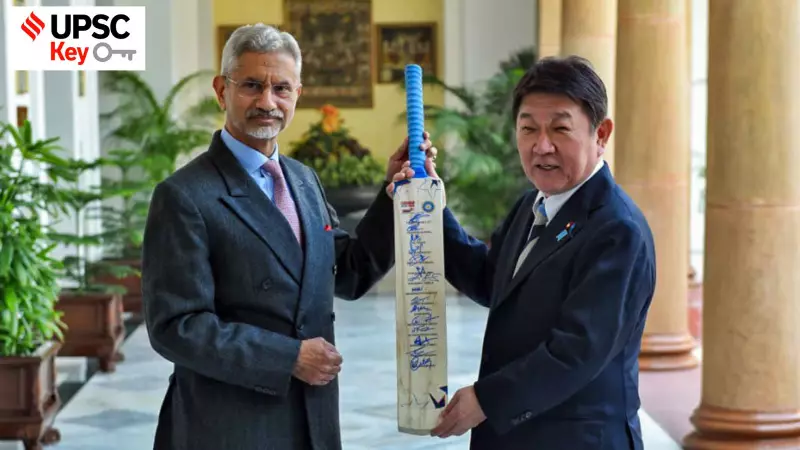
External Affairs Minister S. Jaishankar met Japanese Foreign Minister Toshimitsu Motegi in New Delhi. They co-chaired the 18th India-Japan Strategic Dialogue. Jaishankar presented a signed cricket bat to Motegi, symbolizing the strong bilateral relationship.
The two nations launched an AI Dialogue and a joint working group on critical minerals. Officials announced these steps for 2026. They aim to enhance cooperation in artificial intelligence and rare earth elements.

Jaishankar emphasized the partnership's potential to de-risk the global economy. He noted the alignment of India's Indo-Pacific vision with Japan's Free and Open Indo-Pacific policy. The countries also plan a second round of Economic Security Dialogue in early 2026.
Key points for UPSC:- AI Dialogue and critical minerals group boost bilateral cooperation.
- QUAD's importance for India and Japan in regional stability.
- Historical ties since 2000, upgraded to Special Strategic and Global Partnership in 2014.
- Convergence in Act East Policy and Indo-Pacific Oceans Initiative.
Supreme Court Suggests POCSO Act Reforms
The Supreme Court urged the government to consider a "Romeo-Juliet" exception in the POCSO Act. Justices Sanjay Karol and N Kotiswar Singh made this observation. They highlighted misuse of the Act in cases involving consensual adolescent relationships.
The court noted that nearly 25% of POCSO cases in some states involve romantic relationships. Families often misuse the law to oppose inter-caste or inter-religious unions. The Act currently criminalizes all sexual activity with persons under 18, regardless of consent.
Advocate Indira Jaising proposed a "close-in-age" exception for adolescents. The government opposes reducing the age of consent, citing protection for children. The Law Commission of India previously suggested judicial discretion in sentencing for ages 16-18.
Key points for UPSC:- POCSO Act enacted in 2012 to address child sexual abuse.
- Debate on age of consent and "mature minor" doctrine.
- Impact on adolescent health services due to mandatory reporting.
- Constitutional rights under Articles 14, 15, 19, and 21.
Startup India Celebrates 10 Years with Major Growth
Prime Minister Narendra Modi marked National Startup Day and a decade of the Startup India scheme. He reported that India now hosts over 200,000 startups, up from less than 500 in 2016. The country boasts 125 unicorns and registered 44,000 new startups in 2025 alone.
Modi emphasized developing indigenous AI on Indian servers. He mentioned onboarding 38,000 GPUs under the IndiaAI Mission. The Prime Minister also highlighted women's role, with over 45% of startups having at least one woman director.
The government decriminalized 180 provisions through the Jan Vishwas Act. It also supported startups via the Government e-Marketplace, with orders worth over Rs 50,000 crore.
Key points for UPSC:- Startup India launched on January 16, 2016, by DPIIT.
- Focus on AI, manufacturing, and global-standard products.
- Initiatives like Atal Tinkering Labs and hackathons foster innovation.
- Economic impact through job creation and investment.
Additional Key Topics for UPSC Preparation
Western Disturbances and Snowfall Deficit: Himalayan states like Uttarakhand, Himachal Pradesh, and Jammu & Kashmir experienced dry winters. Weak western disturbances led to reduced snowfall, affecting water security and agriculture. Experts link this to climate change trends.
Supreme Court on Judge Impeachment: The court upheld the Lok Sabha Speaker's committee against Justice Yashwant Varma. It clarified procedures under the Judges (Inquiry) Act, 1968, emphasizing constitutional safeguards without paralyzing removal processes.

Export Challenges and US Tariffs: India's exports grew modestly by 1.8% in December 2025, with a trade deficit of $25 billion. US tariffs impacted sectors like basmati rice, especially with Iran as a key market. The government seeks to widen the export pool to offset pressures.
AI and National Development: Commentaries stress the need for India to become a sovereign AI power. Suggestions include a national AI mission, public investment, and shifting from jugaad to precision systems to harness AI for education, judiciary, and security.
Practice Questions for UPSC Aspirants
- Discuss the significance of the India-Japan AI Dialogue for bilateral relations and global economic de-risking.
- Analyze the implications of the "Romeo-Juliet" exception in the POCSO Act for adolescent rights and legal frameworks.
- Evaluate the impact of the Startup India scheme on entrepreneurship and innovation over the past decade.
These topics require thorough understanding for current affairs and syllabus areas like international relations, polity, and economy. Regular revision and answer writing practice will enhance preparation.