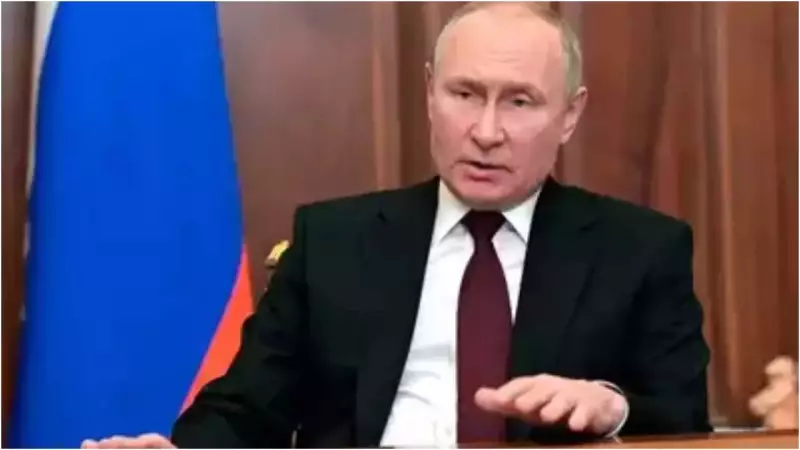
A landmark public inquiry in the United Kingdom has concluded that Russian President Vladimir Putin personally authorised the 2018 nerve agent attack on former double agent Sergei Skripal in Salisbury. The inquiry labelled the operation, which used the military-grade Novichok poison, a "reckless" display of power that directly led to the tragic death of an innocent British woman, Dawn Sturgess.
The Salisbury Attack and Its Deadly Aftermath
On March 4, 2018, Sergei Skripal and his daughter Yulia were found unconscious on a public bench in the southern English city of Salisbury. They had been targeted with Novichok, a chemical weapon developed by Russia, which was smeared on the handle of Skripal's front door. Both Skripals, along with a police officer who attended the scene, fell critically ill but eventually recovered.
The story took a devastating turn in July 2018, when 44-year-old Dawn Sturgess, a mother of three, died after being exposed to the same nerve agent. Her partner had found a counterfeit perfume bottle that Russian intelligence officers had used to smuggle the Novichok into the UK and then discarded. The inquiry heard the bottle contained enough poison to kill thousands of people.

Inquiry Findings: A State-Sanctioned Assassination
The chair of the inquiry, former UK Supreme Court judge Sir Anthony Hughes, stated the evidence was "overwhelming" that the assassination attempt was a Russian state operation. He asserted that a team of operatives from Russia's GRU military intelligence agency carried out the attack.
"I have concluded that the operation to assassinate Sergei Skripal must have been authorised at the highest level, by President Putin," Hughes said in his report. He described the GRU officers' actions in discarding the Novichok container as "astonishingly reckless," holding them, their superiors, and ultimately Putin morally responsible for Sturgess's death.
The report frames the attack not merely as revenge against Skripal—who sold secrets to Britain and was swapped in a 2010 spy exchange—but as a "public statement" of Russian power and willingness to act decisively on foreign soil.
Diplomatic Fallout and UK Sanctions
In response to the inquiry's findings, the British government announced new sanctions against the GRU intelligence agency and summoned the Russian ambassador. British police have already charged three suspected GRU members in absentia for the attack.
UK Prime Minister Keir Starmer stated, "The Salisbury poisonings shocked the nation and today’s findings are a grave reminder of the Kremlin’s disregard for innocent lives." He added that the new sanctions were part of the UK's "unwavering defence of European security" and efforts to support Ukraine.
Russia has consistently denied all involvement, dismissing the accusations as anti-Russian propaganda. The Russian embassy in London claimed the UK was using the report to disrupt peace talks regarding Ukraine.
This is the second major UK inquiry to directly blame President Putin for a lethal attack on British soil, following the 2016 finding that he "probably approved" the murder of ex-FSB officer Alexander Litvinenko in London.