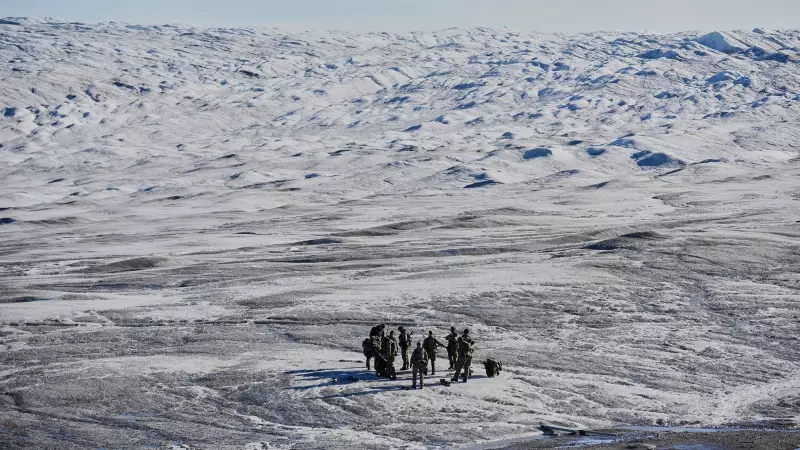
In a significant strategic move, the United Kingdom has initiated high-level discussions with the North Atlantic Treaty Organization (NATO) to forge a unified response to the growing influence of Russia and China in the resource-rich and strategically vital Arctic region. This development underscores a major shift in global security priorities as melting ice caps open new sea routes and economic opportunities.
Britain's Strategic Push for an Arctic Coalition
The British government, led by Defence Secretary Grant Shapps, is actively pursuing the creation of an "Arctic coalition" under the NATO umbrella. The primary objective is to coordinate allied efforts to monitor and deter activities by Moscow and Beijing that are perceived as threats to regional stability. This initiative was a central topic during the recent NATO defence ministers' meeting held in Brussels.
Grant Shapps emphasized that the UK is already taking a leadership role in this domain. He pointed to the deployment of a Royal Navy frigate, HMS Somerset, to the Arctic and the planned mission of a future Type 31 frigate to the region later this year as evidence of Britain's commitment. The UK's focus is on ensuring that NATO maintains a vigilant and capable presence to safeguard the Arctic from potential adversarial actions.

The Dual Challenge: Russia's Militarization and China's 'Near-Arctic' Claims
The UK's strategy is driven by two distinct yet interconnected challenges. Firstly, Russia has been substantially bolstering its military footprint in the Arctic over the past decade. This includes the renovation and construction of numerous airfields and military bases along its northern coastline, significantly enhancing its power projection capabilities in the High North.
Secondly, China's increasing assertiveness has raised alarms in Western capitals. Despite having no territorial claims in the Arctic, Beijing declared itself a "near-Arctic state" in 2018 and has been actively pursuing scientific, economic, and strategic interests in the area. The fear in London and other NATO capitals is that China's activities, often in partnership with Russia, could undermine the rules-based international order in the region.
Shapps explicitly warned of a growing partnership between Russia and China, describing it as an "authoritarian alliance" with ambitions to dominate the Arctic. He stressed that NATO cannot afford to be complacent and must present a united front to counterbalance this combined influence.
NATO's Response and the Path Forward
The proposal from the UK has been met with a generally positive reception within NATO. The alliance has acknowledged the evolving security dynamics in the Arctic and the need for a more coordinated approach. While NATO has traditionally not been the primary security provider in the Arctic, with countries like Norway, Canada, and the US playing leading roles, the changing landscape is prompting a reassessment.
The UK's vision involves not just military coordination but also a focus on protecting critical undersea infrastructure, such as data cables and pipelines, which are vulnerable to sabotage. Furthermore, the coalition would work to ensure that emerging Arctic sea routes, like the Northern Sea Route, remain open and free, governed by international law rather than the dictates of any single nation.
The ultimate goal is to prevent the Arctic from becoming a zone of conflict or unregulated competition. By bringing NATO allies together, the UK aims to promote stability, ensure security, and uphold the principle of peaceful cooperation in this rapidly changing frontier. The talks mark a crucial step in shaping the West's long-term strategic posture in the face of 21st-century geopolitical rivalries.