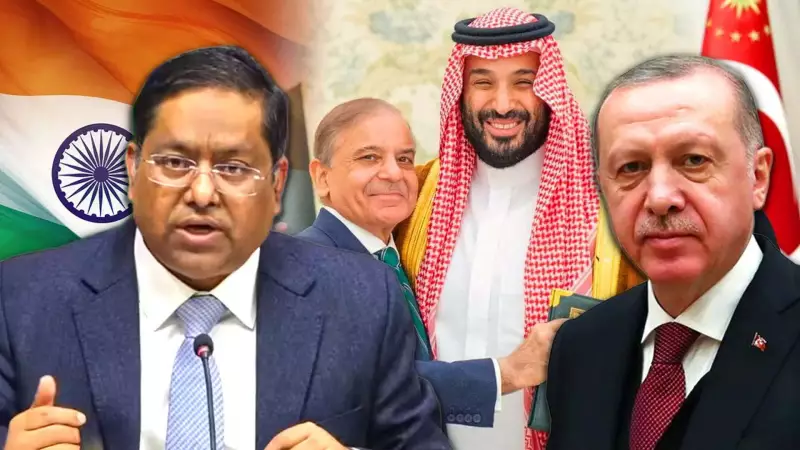
Islamic Military Alliance Takes Shape as Turkey Eyes Defense Pact
A significant defense agreement signed between Saudi Arabia and Pakistan in September is now expanding its reach. Turkey appears poised to join this strategic partnership, creating what analysts describe as a potential "Islamic NATO." This development marks a major shift in Middle Eastern and South Asian security arrangements.
The Core Agreement and Its Implications
The original Saudi-Pakistan pact contains a crucial mutual defense clause. This provision mirrors Article 5 of the North Atlantic Treaty Organization, where an attack on one member triggers a collective response. Turkey's involvement would transform this bilateral arrangement into a formidable trilateral alliance.
Each nation brings distinct military strengths to the table. Saudi Arabia contributes substantial financial resources and economic leverage. Pakistan offers its nuclear weapons capability and experienced armed forces. Turkey provides advanced military technology and a powerful conventional military.

Timing and Regional Context
These alliance discussions follow closely on the heels of Operation Sindoor. That military exercise occurred during a period of heightened regional tensions, testing various nations' defense capabilities. The timing suggests these countries are actively seeking stronger security partnerships in a volatile environment.
For India, these developments represent more than routine diplomacy. They signal a deeper realignment in which Turkey, a longstanding NATO member, appears willing to operate outside traditional Western frameworks. This move demonstrates Ankara's pursuit of independent foreign policy objectives.
Shared Interests and Strategic Concerns
The emerging bloc finds common ground on several critical regional issues. Member states share perspectives on Iran's regional influence, the ongoing conflict in Syria, and the Palestinian question. These shared interests provide a foundation for expanded defense cooperation beyond the formal pact.
Defense collaboration between these nations has been growing steadily. Joint military exercises, technology transfers, and intelligence sharing have increased in recent years. The formal pact institutionalizes these existing relationships while opening doors for deeper integration.
New Delhi cannot afford to ignore this developing axis. The combination of financial resources, nuclear capability, and advanced military technology presents new strategic challenges for Indian policymakers. This alliance may influence conflicts from Kashmir to the broader Middle East.As these three powerful Muslim-majority nations move closer together, the international community watches carefully. Their partnership could reshape security dynamics across multiple regions, creating new alliances and potentially new rivalries in an already complex geopolitical landscape.