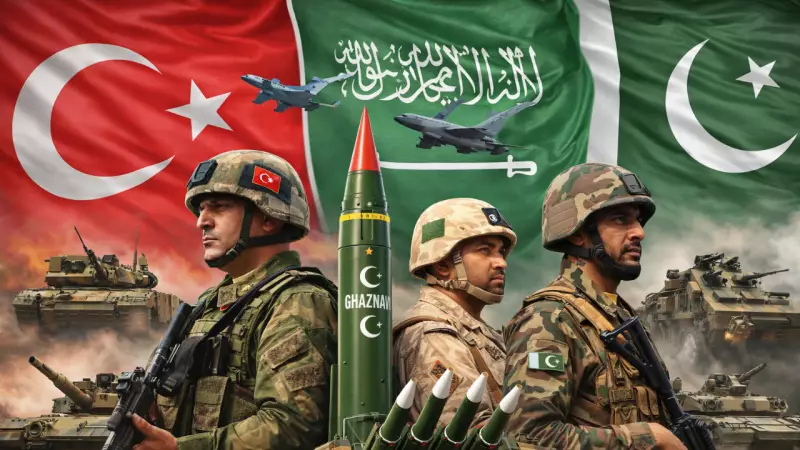
Turkey is actively seeking membership in a defense pact between Pakistan and Saudi Arabia. This move signals a significant shift in Middle Eastern security alignments. The agreement could reshape regional power dynamics.
A New Security Bloc Emerges
Pakistan and Saudi Arabia originally signed this defense agreement in September. The pact includes a crucial mutual defense clause. It states that any aggression against one member will be treated as an attack on all.
This provision directly mirrors Article 5 of the NATO treaty. Turkey currently serves as a NATO member with the alliance's second-largest military after the United States. Talks regarding Turkey's entry have reached an advanced stage according to sources familiar with the negotiations.

Strategic Interests Align
The expanded alliance reflects growing strategic overlap between Turkey, Saudi Arabia, and Pakistan. Their interests converge across South Asia, the Middle East, and parts of Africa. Turkey views this arrangement as strengthening its security posture.
Questions persist about United States reliability under President Donald Trump's administration. Despite Washington's close military ties with all three countries, Turkey seeks additional security assurances. The new pact provides an alternative framework.
Complementary Strengths
Each member brings distinct capabilities to the grouping. Saudi Arabia contributes substantial financial strength. Pakistan offers nuclear capability, ballistic missiles, and significant manpower.
Turkey provides extensive military experience and a rapidly expanding defense industry. Nihat Ali Ozcan, a strategist with Ankara-based think tank TEPAV, outlined these complementary strengths. He emphasized how changing regional dynamics prompt countries to develop new security mechanisms.
"As the US prioritizes its own interests and that of Israel in the region, changing dynamics and fallout from regional conflicts are prompting countries to develop new mechanisms to identify friends and foes," Ozcan explained.
Diplomatic Responses
The Turkish defense ministry declined to comment on the report. Pakistan's information ministry did not respond to requests for comment. Saudi officials were unavailable over the weekend when inquiries were made.
Historical Context
If Turkey formally joins the pact, it would mark a new phase in relations with Saudi Arabia. These nations were once rivals for leadership of the Sunni Muslim world. After years of strained ties, they are now deepening economic and defense cooperation.
The Turkish defense ministry confirmed the countries held their first-ever naval meeting in Ankara this week. This demonstrates growing military collaboration between former competitors.
Shared Regional Concerns
Despite shared concerns over Shiite-majority Iran, Turkey and Saudi Arabia favor engagement with Tehran rather than confrontation. Both countries support a stable, Sunni-led Syria. They also back Palestinian statehood initiatives.
Existing Military Cooperation
Turkey and Pakistan already maintain close military ties. Ankara is currently building corvette warships for Pakistan's navy. Turkey has upgraded Islamabad's F-16 fighter jets. Drone technology is shared with both Pakistan and Saudi Arabia.
Turkey now wants both countries to join its Kaan fifth-generation fighter jet program. This represents another layer of defense collaboration between the potential alliance members.
Regional Tensions
The trilateral defense discussions follow recent regional conflicts. A ceasefire between India and Pakistan ended a four-day military clash in May. Tensions between these nuclear-armed neighbors remain elevated.
Pakistan and Afghanistan continue to experience diplomatic friction. Islamabad accuses the Taliban of sheltering hostile militant groups. Turkey and Qatar have mediated talks between the sides, though these efforts have not yet produced a breakthrough.
The emerging defense alliance represents a strategic response to these regional uncertainties. Countries are seeking new security arrangements beyond traditional alliances.