

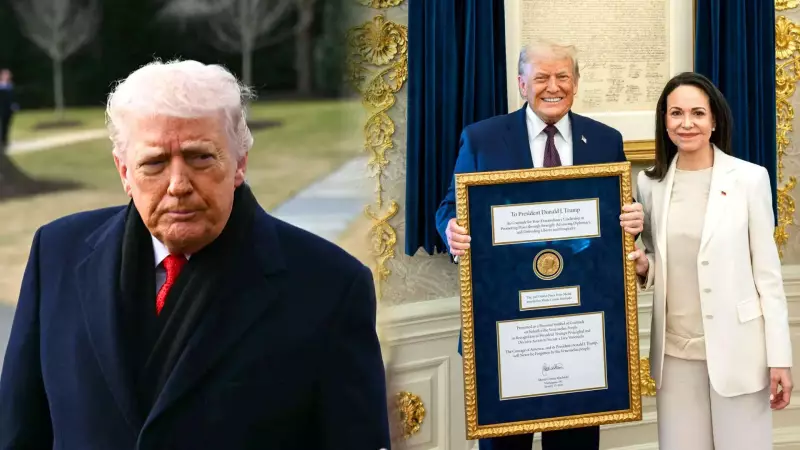
Trump's Nobel Peace Prize Gesture Revives India-Pakistan Ceasefire Debate
Former US President Donald Trump has reignited a contentious South Asian narrative. His acceptance of a Nobel Peace Prize medal from Venezuelan opposition figure María Corina Machado has brought renewed attention to his claims about preventing war between India and Pakistan.
The Controversial Claim
Trump consistently asserts that American intervention played a decisive role in de-escalating tensions. He points to the peak of hostilities in 2019. According to his narrative, US diplomatic pressure and strategic trade leverage forced both nations to step back from the brink of conflict.
India presents a fundamentally different account. Official sources in New Delhi firmly reject the idea of external coercion. They maintain that the decision for ceasefire and military restraint was a sovereign choice. It emerged from direct, bilateral channels between the Indian and Pakistani militaries.

Global Pushback and Historical Accuracy
As Trump uses this episode to bolster his credentials for the Nobel recognition, international observers and institutions are raising objections. The core criticism centers on the manipulation of historical events. Symbolic gestures, they argue, should not be allowed to rewrite or oversimplify complex geopolitical realities.
The concern for India extends beyond mere political optics. Officials in New Delhi are wary of setting a dangerous precedent. They fear allowing foreign leaders to recast sensitive regional crises for personal prestige or domestic political gain. This could undermine the sovereignty of nations involved in such disputes.
A Clash of Narratives
The situation highlights a clear clash between two powerful narratives:
- The US-centric view: Portrays American power as an indispensable force for peace, capable of compelling rival nations to stand down.
- The Indian perspective: Emphasizes regional agency, sovereign decision-making, and the primacy of direct dialogue between the involved parties.
This disagreement is not merely academic. It touches on deeper issues of how history is recorded, who gets credit for peace, and the role of major powers in regional conflicts. The Nobel Peace Prize, with its immense symbolic weight, has become the latest battleground for this ongoing dispute.
For now, the facts on the ground remain contested. While Trump champions his version of events, India and independent analysts continue to question the accuracy of his claims, ensuring this debate will persist in international discourse.






