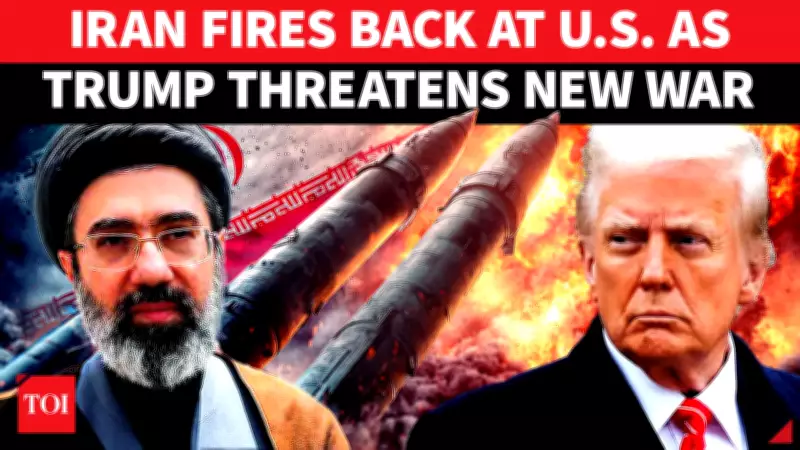
Trump's 'Ready for Conquest' Warning Sparks Fiery Iranian Retaliation
In a dramatic escalation of geopolitical tensions, U.S. President Donald Trump has issued a stark warning to Iran, signaling potential military action despite a recently announced two-week ceasefire. The inflammatory declaration has prompted immediate and forceful pushback from Iranian authorities, creating renewed uncertainty in an already volatile region.
'Fingers on Trigger': Iran's Immediate Response
Iranian officials have responded with what they describe as "fingers on trigger" readiness following President Trump's provocative statements. The fiery exchange comes at a delicate moment in international diplomacy, threatening to unravel fragile peace efforts that had been cautiously progressing in recent weeks.
Trump's Truth Social Ultimatum
President Trump took to his Truth Social platform to deliver what many analysts are calling an ultimatum to the Iranian government. In his characteristically bold language, the U.S. president declared that American military forces will remain deployed in and around Iran until what he terms a "real agreement" is fully honored and implemented.

The American president warned explicitly that failure to comply with U.S. demands could trigger what he described as "a massive military response - bigger, better, and stronger than anyone has ever seen before." This language represents a significant escalation in rhetoric from previous administration statements.
Key Red Lines Reiterated
In his social media post, President Trump reiterated several non-negotiable positions that the United States considers fundamental to regional stability:
- Complete nuclear weapons prohibition: The U.S. maintains its strict ban on Iran developing or acquiring nuclear weapons capabilities
- Strait of Hormuz security: Ensuring uninterrupted navigation through this critical global oil route remains a top priority
- Regional stability: Preventing Iranian influence from destabilizing neighboring countries
Ceasefire Under Pressure
The timing of President Trump's declaration is particularly significant, coming shortly after the announcement of a two-week ceasefire agreement. Many diplomatic observers had hoped this temporary pause in hostilities might create space for more substantive negotiations. However, the latest exchange suggests that fundamental disagreements remain unresolved and potentially irreconcilable under current conditions.
Regional analysts note that the "ready for next conquest" language represents a departure from more measured diplomatic terminology typically employed in international relations. This shift toward more confrontational rhetoric has raised concerns among America's traditional allies and adversaries alike.
Global Implications
The escalating verbal conflict between Washington and Tehran carries significant implications for global energy markets, regional security arrangements, and international diplomatic efforts. The Strait of Hormuz alone accounts for approximately one-fifth of the world's petroleum consumption passing through its narrow waters, making any threat to its security a matter of global concern.
As both sides appear to be hardening their positions, the international community watches anxiously to see whether this war of words will translate into concrete military action or whether diplomatic channels can still be revived to prevent further escalation in one of the world's most strategically important regions.