Trump Unveils Controversial 'Board of Peace' at Davos World Economic Forum
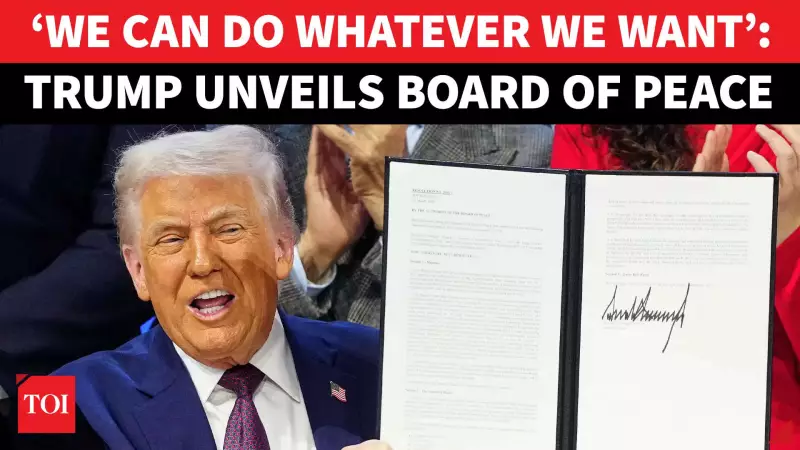
In a significant geopolitical move, former US President Donald Trump formally launched his much-debated "Board of Peace" initiative at the prestigious World Economic Forum in Davos. The announcement came with a staggering one-billion-dollar membership fee requirement, positioning this new global body as an ambitious venture that some analysts suggest could potentially challenge the established authority of the United Nations in international affairs.
Global Leadership Claims and International Criticism
Standing alongside leaders and senior officials representing nineteen different nations, President Trump made bold assertions about his administration's impact on global stability. He declared that the world has become "richer, safer, and more peaceful" under his leadership, specifically highlighting his government's role in de-escalating or stopping conflicts across multiple regions including Gaza, Ukraine, South Asia, Africa, and the Caucasus.
Trump described the newly established Board of Peace as "one of the most consequential institutions ever created" while attempting to clarify its relationship with existing international organizations. He insisted that this board would operate in conjunction with the United Nations rather than seeking to replace it entirely, though critics remain skeptical about potential overlaps and conflicts of interest.

Sharp Criticism Directed at Spain and Nigeria
During his comprehensive Davos address, President Trump didn't shy away from publicly calling out specific nations for what he perceives as policy failures. He directed particularly sharp criticism toward Spain, accusing Madrid of refusing to meet NATO's newly established five percent defense spending target. Trump issued a stern warning that American security guarantees "should not be taken for granted" by allies who fail to meet their financial commitments to collective defense.
The former president further turned his attention to Nigeria, where he alleged that terrorist groups are systematically targeting and killing Christian communities. Trump claimed his administration had taken decisive military action to counter this extremist violence, though he provided limited specific details about these operations during his public remarks.
Comprehensive Mediation Claims Across Multiple Conflicts
Beyond the Board of Peace announcement, President Trump outlined what he described as extensive mediation efforts undertaken by his administration across numerous international disputes. These included:
- Intervention in the longstanding Nile dam dispute involving Egypt and Ethiopia
- Claims of halting military conflicts between India and Pakistan
- Efforts to ease tensions between Kosovo and Serbia
- Diplomatic work between Rwanda and Congo
- Mediation between Armenia and Azerbaijan
Additionally, Trump asserted that his policies had significantly weakened several militant organizations including Hamas, Hezbollah, and ISIS, while also addressing concerns about Iran's nuclear program through diplomatic pressure and strategic negotiations.
The Davos announcement represents a significant moment in Trump's ongoing efforts to reshape global governance structures, though international reactions remain mixed with some allies expressing concern about the potential fragmentation of existing multilateral systems. The substantial membership fee requirement has also raised questions about accessibility for smaller nations and whether the board might become dominated by wealthier countries willing to pay the premium for influence in this new international framework.