Trump's $700 Billion Greenland Ambition Meets Strong Resistance
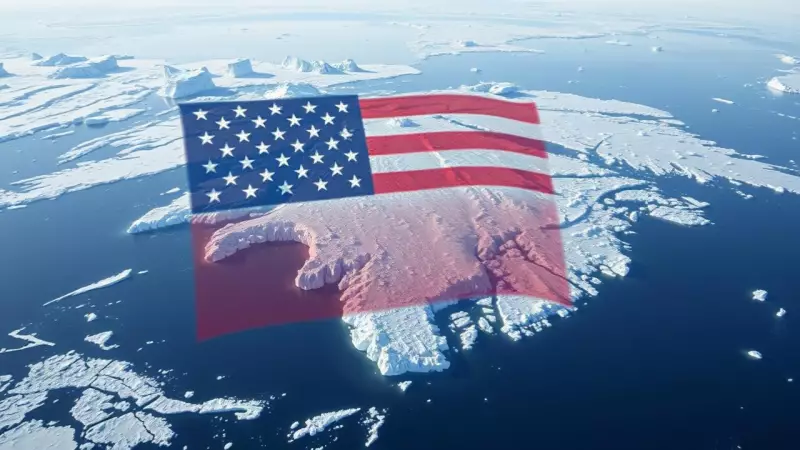
President Donald Trump's goal to buy Greenland could cost the United States as much as $700 billion, according to estimates from scholars and former US officials. That staggering sum equals roughly Rs 58.1 lakh crore. These experts prepared the cost analysis as part of planning around Trump's aspiration to acquire the massive 800,000-square-mile island.
The price tag represents more than half of the annual US Defense Department budget. Trump views Greenland as a strategic buffer in the Arctic against America's top adversaries. His push for this national security priority has created anxiety across Europe and on Capitol Hill.
Greenland and Denmark Firmly Reject US Ownership
Greenland, a semi-autonomous territory of the Kingdom of Denmark, is not for sale. Officials from both Denmark and Greenland have rejected Trump's claims that the US will acquire Greenland "one way or the other." A senior White House official stated that Secretary of State Marco Rubio received directions to develop a purchase proposal in coming weeks.

The official described such a plan as a "high priority" for Trump. On Wednesday, Rubio and Vice President JD Vance scheduled meetings with officials from Denmark and Greenland. These officials traveled to Washington seeking clarity on Trump's intentions and proposals.
"I'd love to make a deal with them," Trump told reporters on Sunday when asked about potential Greenland arrangements. He added, "It's easier. But one way or the other, we're going to have Greenland."
Greenland Chooses Denmark Over United States
Before Wednesday's meetings, Greenland's government delivered a consistent message. Foreign Minister Vivian Motzfeldt declared upon arriving in Washington, "Greenland does not want to be owned by, governed by or part of the United States." She emphasized, "We choose the Greenland we know today — as part of the Kingdom of Denmark."
Greenland's minister for business and mineral resources, Naaja Nathanielsen, revealed that US messages cause such concern for Greenlanders that they struggle to sleep. "This is really filling the agenda and the discussions around the households," Nathanielsen said at a London news conference. She described "massive pressure" affecting people directly.
Despite the anxiety, Nathanielsen affirmed, "we have no intentions of becoming American."
Existing Agreements Could Provide Military Access
A US official familiar with the issue noted that America could already deploy more troops in Greenland and expand military capabilities under current agreements. The official questioned the need for purchase, asking, "Why invade the cow when they'll sell you the milk at relatively good prices?"
Some Trump administration officials suggested the US could use military force to take the island with 57,000 residents. However, other administration officials and outside allies viewed purchase or new alliance formation as more likely outcomes.
Alternative Options Under Consideration
Another option includes forming a compact of free association with Greenland. This agreement would provide US financial assistance in exchange for security presence. The US maintains similar agreements with the Republic of the Marshall Islands, the Federated States of Micronesia, and the Republic of Palau.
Adding Greenland through such arrangement could satisfy part of Trump's vision for American hegemony in the Western Hemisphere. It would likely cost less than the estimated $500 billion to $700 billion purchase price.
Historical context reveals the US agreed in 1916 to buy Caribbean islands from Denmark. That agreement acknowledged the US "will not object" to Danish political and economic interests in Greenland.
Trump's Real Estate Mindset and Strategic Concerns
Trump compared acquiring Greenland to owning versus leasing property, wanting more rights to the land. Ownership could make Greenland similar to US territories like Guam, American Samoa, or Puerto Rico. It would solidify Washington's strategic relationship with the island long-term.
Experts and congressional testimony indicate Trump's desire stems partly from concerns about Greenland seeking independence. If successful, the island's 27,000 miles of coastline could fall to adversaries like Russia or China.

Greenlanders overwhelmingly reject becoming part of the US. An independent poll last year showed about 85% opposition to the idea.
Growing Seriousness in Second Term
Trump, a former real estate magnate, long eyed Greenland for Arctic national security. During his first administration, even close aides didn't treat the idea as serious priority. That changed dramatically in his second term.
Trump's designs on Greenland gained serious consideration inside his administration and among allies. He made public overtures soon after taking office last January. In December, he appointed Louisiana Governor Jeff Landry as special envoy to Greenland, reigniting Danish and Greenland concerns.
Now, Europe and the US sense growing inevitability that Trump will gain some ground in his Greenland aspirations. The questions remain about methods—economic coercion, diplomacy, or military force—and costs.
Military Force Considered Unlikely and Destructive
Ian Lesser, a fellow with the German Marshall Fund of the United States, suggested Trump's threats might pressure Greenland and Denmark to discuss better US positioning. "I still think the prospects of the use of force over this issue is still very small," he said.
Lesser added, "It's unnecessary. What would be the point? It would stir up unbelievable tensions within the NATO alliance and maybe even spell the end of the NATO alliance." He doubted presidential support from Capitol Hill for such action.
Bipartisan Opposition on Capitol Hill
Trump's saber-rattling toward Greenland faces Capitol Hill resistance, including from some Republican allies who praised his Venezuela military operation. On Tuesday, a bipartisan senator duo introduced legislation prohibiting Defense Department funds from controlling NATO member territory without authorization.
This clear message opposes Trump's rhetoric about acquiring Greenland. The legislation requires approval from the North Atlantic Council, NATO's principal political decision-making body.
Existing US Presence and Future Possibilities
Greenland hosts a small US military footprint at Pituffik Space Base, which Vice President Vance and his wife visited last year. The base includes US Space Force personnel and radar systems serving as early warning against Russian attacks. The US and Denmark regularly share intelligence about regional military observations.
Greenland long showed receptiveness to hosting more US military assets or negotiating strategic resources like rare earth minerals. Danish Prime Minister Mette Frederiksen stated last year, "It is possible to find a way to ensure stronger footprints in Greenland" for US military.
Frederiksen noted the US "already there, and they can have more possibilities." She recently expressed concern that Trump taking Greenland by force would unravel NATO, since both Denmark and the US are members.
Last week, America's European allies including Denmark issued a joint statement vowing to "not stop defending" sovereignty values and Greenland's territorial integrity. They affirmed, "Greenland belongs to its people."