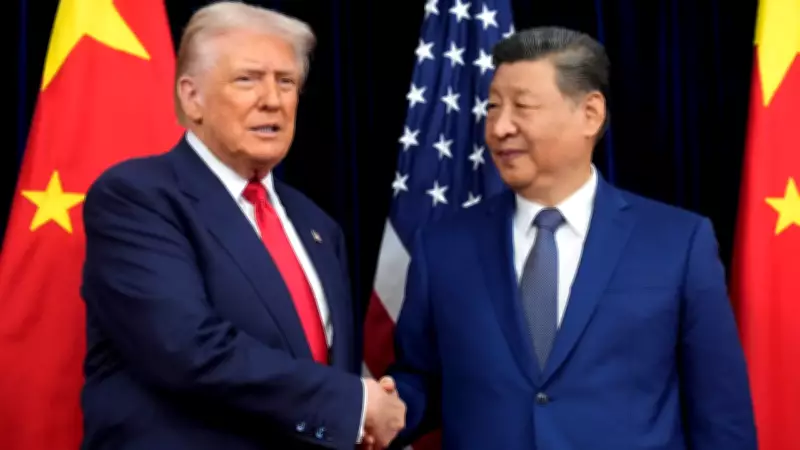
US President Donald Trump is set to arrive in Beijing for a highly anticipated summit with Chinese President Xi Jinping, marking a critical moment in US-China relations. The meeting, scheduled from Wednesday to Friday, comes amid global conflicts, economic uncertainty, and intensifying competition between the world's two largest economies. Trump has emphasized that trade will be the primary focus, aiming to secure increased Chinese purchases of American agricultural goods and aircraft. Both sides are expected to discuss the formation of a "Board of Trade" to manage future disputes, following last year's tariff war and China's restrictions on rare earth minerals.
Trade and Economic Cooperation
Trade and economic cooperation are expected to dominate the discussions. Trump has repeatedly expressed his desire to reduce tensions that emerged after the tariff disputes and China's rare earth mineral restrictions. Officials from both countries are also exploring the possibility of creating a new "Board of Trade" aimed at preventing future economic conflicts and improving long-term business relations. The US delegation includes prominent business executives such as Elon Musk and Tim Cook, signaling the importance of economic ties.
Taiwan and Weapons Sales
Taiwan remains a key issue ahead of the summit. Trump has indicated his readiness to discuss American weapons sales to Taiwan during his visit, while expressing confidence that his relationship with Xi can prevent conflict over the island. China opposes US weapons sales to Taiwan and views the island as part of its territory. Taiwan's foreign ministry responded by stating it would continue to strengthen cooperation with the US and build effective deterrence capabilities. Chinese foreign ministry spokesperson Guo Jiakun reiterated Beijing's consistent and clear opposition to US arms sales to Taiwan.

Nuclear Arms Agreement
Trump also plans to raise the idea of a three-way nuclear arms agreement involving the United States, China, and Russia, despite China's reluctance to join such a pact. This proposal comes amid ongoing global security concerns and China's growing military capabilities.
G2 Diplomacy Revival
The summit has revived debate around the "G2" diplomacy concept, where the world's two largest powers could jointly shape the global political and economic order. The idea, first proposed in 2005 by economist C. Fred Bergsten, gained momentum during the Obama administration. Trump and Xi previously met in Busan last October, where they agreed to roll back certain trade restrictions. However, the possible return of G2 diplomacy has raised concerns among traditional US allies, particularly in Europe, who fear bilateral deals could weaken multilateral institutions.
Global Context
The meeting takes place against a backdrop of rising geopolitical uncertainty, including the Middle East conflict involving Iran, which has impacted global energy supplies. Trump has stated that Iran would not dominate the discussions with Xi. Additionally, the summit comes as tensions over artificial intelligence, technology competition, and semiconductor supply chains continue to strain relations.
Diplomatic Styles
Trump's outspoken and informal approach to international relations contrasts sharply with Xi's reserved and carefully controlled communication style. Trump has predicted a "big, fat hug" from Xi upon arrival, while China confirmed the visit only earlier this week, reflecting its cautious diplomatic style. Despite these differences, China's foreign ministry emphasized the irreplaceable strategic guiding role of leader-to-leader diplomacy in shaping US-China relations.