

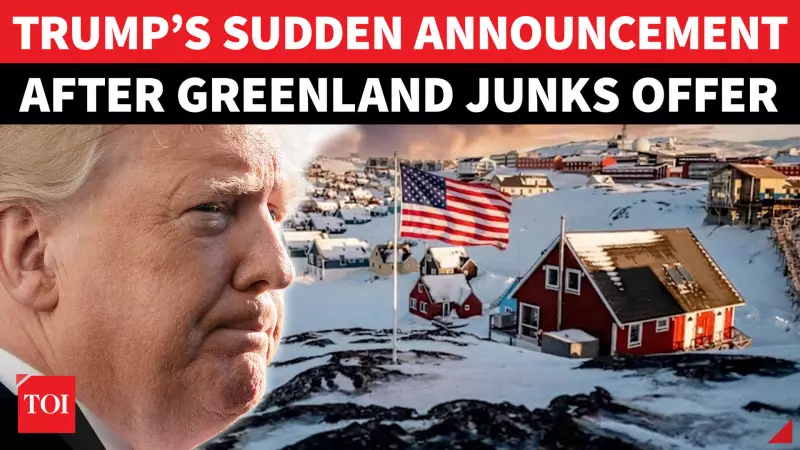
Former President Donald Trump has sharply escalated diplomatic tensions with Denmark and Greenland. He issued a direct warning to Greenland's prime minister after the island firmly rejected an American offer to assume control.
Trump's Strong Warning at Joint Base Andrews
Speaking publicly at Joint Base Andrews, Trump dismissed Greenland's leader in strong terms. He warned of serious consequences following the rejection. This confrontation comes after Copenhagen clearly reaffirmed its commitment to maintaining Greenland under Danish sovereignty and within the NATO alliance.
The Core Dispute Over Greenland
The current standoff traces back to Trump's renewed assertion that the United States must acquire Greenland. He cites pressing national security reasons for this territorial claim. With proposed annexation legislation now introduced in Congress, and high-level discussions actively underway in Washington, the situation grows more tense by the day.

This geopolitical clash is not just about one island. It raises profound and serious questions about national sovereignty in the modern era. The stability of long-standing international alliances, particularly NATO, is now under scrutiny. Furthermore, the delicate balance of power and environmental stability in the strategically vital Arctic region hangs in the balance.
Broader Implications and Regional Stability
The Arctic has become an increasingly important flashpoint in global politics. Control over its resources and shipping lanes is highly coveted. Trump's aggressive posture toward Greenland signals a potential shift in how major powers approach territorial disputes in polar regions.
Observers note that this move could strain relations between the United States and its European allies. Denmark, a steadfast NATO member, finds itself in an unexpected diplomatic confrontation with Washington. The situation underscores how domestic political agendas can quickly spill over into international relations, creating unforeseen challenges for global diplomacy.






