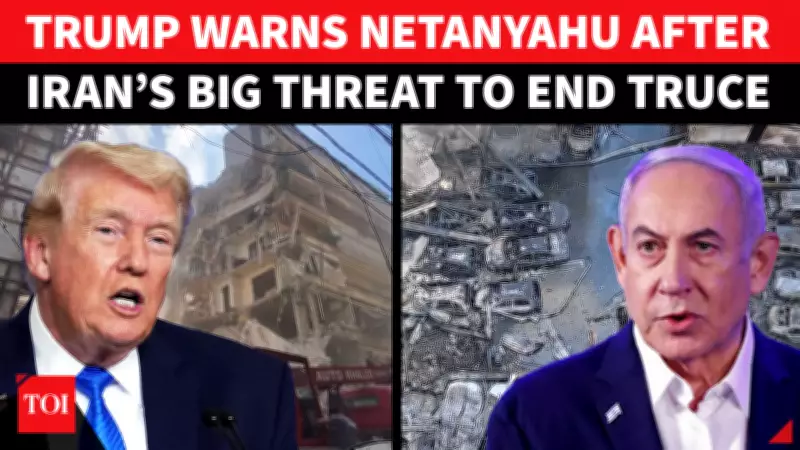
Trump Urges Netanyahu To Limit Lebanon Strikes As Ceasefire Faces Strain
The fragile ceasefire agreement between the United States and Iran is now confronting renewed and significant pressure, as critical differences emerge over its precise scope and enforcement mechanisms. These tensions are particularly focused on Israel's ongoing military operations in Lebanon, which threaten to destabilize the delicate diplomatic balance.
Direct Appeal From Washington
In a notable development, former President Donald Trump has reportedly issued a direct appeal to Israeli Prime Minister Benjamin Netanyahu, urging him to scale back and limit Israeli strikes within Lebanese territory. This request underscores a growing concern within Washington's political circles that continued military escalation could completely derail the broader diplomatic efforts currently underway with Tehran.
The appeal from Trump came amid persistent reports confirming that Israeli military operations against Hezbollah positions would continue unabated. This situation highlights a widening and potentially dangerous gap between the United States' concerted efforts to stabilize the ceasefire and Israel's stated military objectives against the Hezbollah militant group.

Strains on the US-Iran Agreement
The core of the strain lies in the interpretation of the ceasefire's terms. While the US seeks a broad de-escalation to facilitate diplomacy, Israel views its actions in Lebanon as a necessary defensive measure against Hezbollah, which it considers a direct Iranian proxy. This divergence creates a complex geopolitical puzzle.
Analysts suggest that Netanyahu's government is walking a tightrope, balancing domestic security demands with international pressure, particularly from a key ally like the United States. The Israeli military's objectives in southern Lebanon are reportedly focused on degrading Hezbollah's capabilities and creating a buffer zone.The Hezbollah Factor and Regional Implications
Hezbollah's role as a powerful Iranian-backed force in Lebanon is central to this crisis. Any significant Israeli action risks provoking a heavier response from Hezbollah, which could, in turn, compel Iran to reassess its commitment to the US-brokered ceasefire. This chain reaction poses a severe threat to regional stability.
The situation remains fluid and highly volatile. The coming days will be crucial in determining whether diplomatic channels can accommodate Israel's security concerns while preserving the overarching ceasefire framework between Washington and Tehran. The international community is watching closely, aware that a collapse of this agreement could reignite a wider conflict.