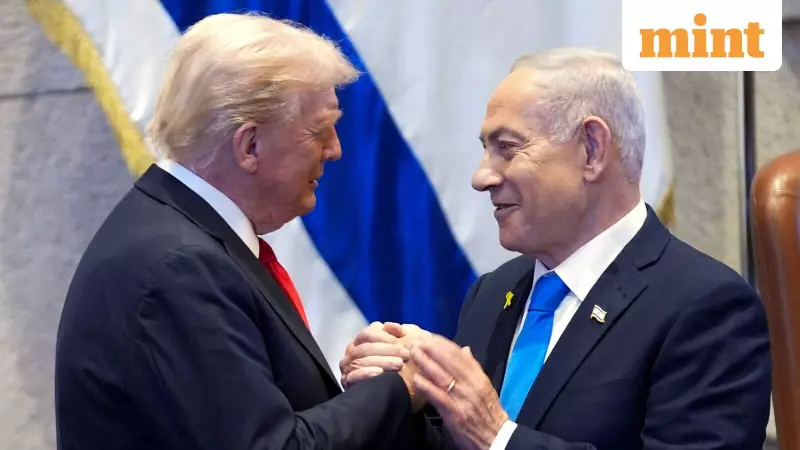
In a significant diplomatic development, former US President Donald Trump has publicly stated his opposition to the United States recognizing the breakaway region of Somaliland. This statement comes in direct contrast to the actions of his prominent ally, Israeli Prime Minister Benjamin Netanyahu, who on Friday made Israel the first country in the world to formally recognize Somaliland as an independent and sovereign state.
Historic Recognition and Immediate Backlash
The announcement by Israel, reported by Reuters, marks a potential watershed moment for the Horn of Africa, testing Somalia's fierce opposition to any form of secession. In an interview with the New York Post published on Friday, Trump was asked about the possibility of US recognition. "No," the former president responded, adding pointedly, "Does anyone know what Somaliland is, really?"
Prime Minister Netanyahu framed the recognition as being "in the spirit of the Abraham Accords," the 2020 agreements brokered by the Trump administration that normalized relations between Israel and several Arab nations. Netanyahu stated Israel would seek immediate cooperation with Somaliland in agriculture, health, technology, and the economy, and invited Somaliland's President, Abdirahman Mohamed Abdullahi, to visit Israel.

President Abdullahi welcomed the move, stating Somaliland would join the Abraham Accords and calling it a step toward regional and global peace. However, the reaction from Somalia's federal government was swift and severe. It condemned Israel's move as an "unlawful step" and a "deliberate attack" on its sovereignty, vowing to use all diplomatic, political, and legal measures to defend its unity.
A Growing Chorus of International Condemnation
The backlash was not confined to Mogadishu. A broad coalition of international actors swiftly rejected Israel's decision on Saturday. The African Union (AU) reaffirmed its "unwavering commitment" to Somalia's territorial integrity, warning such moves risk continental peace. The European Union urged respect for Somalia's unity and called for meaningful dialogue.
Egypt's Foreign Minister held urgent calls with counterparts from Somalia, Turkey, and Djibouti, with all parties condemning the recognition and warning it threatened international peace. Nigeria also "strongly condemned" any actions undermining Somalia's constitutional order. A joint statement by more than 20 countries, predominantly from the Middle East and Africa, along with the Organization of Islamic Cooperation, rejected the measure due to its serious repercussions for security in the Horn of Africa and the Red Sea.
Somaliland's Long Quest for Recognition
Somaliland, a former British protectorate, declared independence from Somalia in 1991 as the latter plunged into civil war. For over three decades, it has maintained effective autonomy, its own government, currency, and relative stability, yet failed to gain recognition from any UN member state. The region, which lies strategically on the Gulf of Aden, hopes Israel's move will encourage other nations to follow suit, boosting its diplomatic standing and access to international markets.
This development occurs against a complex backdrop. In March, both Somalia and Somaliland denied receiving any proposal from the US or Israel to resettle Palestinians from Gaza, with Mogadishu categorically rejecting the idea. The motivations behind Israel's sudden recognition remain unclear, as does whether it expects specific returns from Somaliland.
The stark divergence between Trump's position and Netanyahu's action highlights the unpredictable and contentious nature of this diplomatic gambit. While it offers Somaliland a historic breakthrough, it has galvanized a formidable international front in support of Somalia's sovereignty, setting the stage for heightened tensions in an already volatile region.