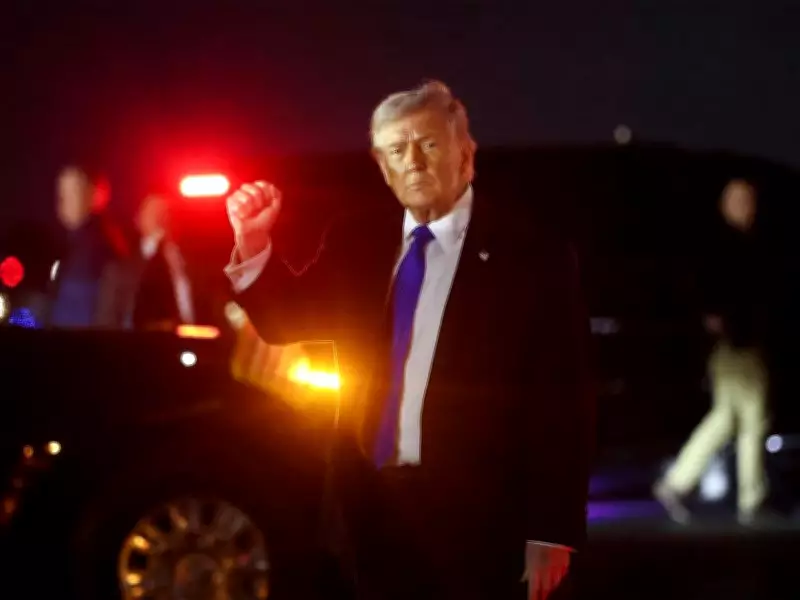
US President Donald Trump announced on Monday that Israel and Iran have agreed to refrain from attacking each other for another week. Speaking to reporters at the White House, Trump stated that both sides had come to an understanding to de-escalate tensions temporarily. The informal agreement comes amid heightened military posturing in the region, with fears of a broader conflict.
Background of the Conflict
Tensions between Israel and Iran have escalated in recent weeks, with both nations exchanging threats and engaging in proxy attacks. Iran has been accused of supplying weapons to militant groups targeting Israel, while Israel has conducted airstrikes on Iranian-linked positions in Syria. The United States has been mediating efforts to prevent a full-scale war.
Trump's Role in Mediation
President Trump revealed that he had been directly involved in discussions with both Israeli and Iranian officials. He emphasized that the temporary truce was a positive step but cautioned that a long-term solution remains elusive. “They’ve agreed to give it another week,” Trump said. “We’ll see what happens. But I think it’s a good thing.”

The president’s statement was met with mixed reactions. Some analysts view the agreement as a diplomatic breakthrough, while others argue it merely delays an inevitable confrontation. The White House has not provided details on the specific terms of the arrangement.
International Reactions
European and Middle Eastern leaders have cautiously welcomed the news. The United Nations called for a permanent ceasefire and urged both parties to engage in direct negotiations. Meanwhile, Iran’s foreign ministry acknowledged the discussions but stopped short of confirming a formal agreement. Israel’s government declined to comment officially.
The situation remains fluid, and the coming days will be critical in determining whether the temporary peace can be extended. The United States has signaled its willingness to continue mediating if both sides show commitment.