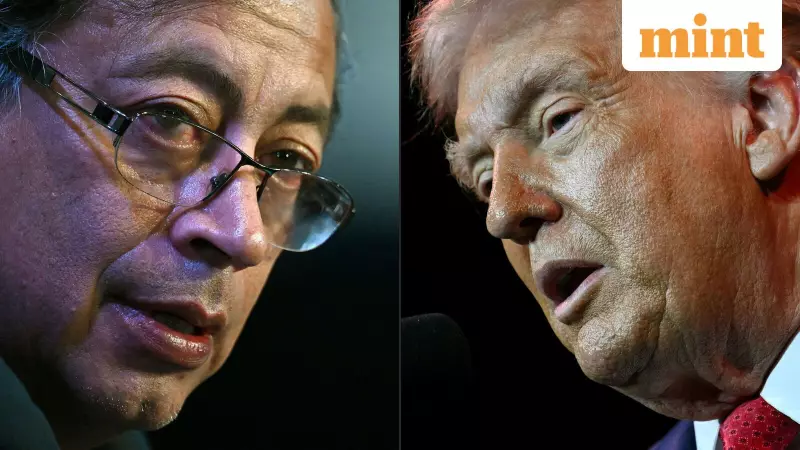
In a dramatic shift from his recent hostile rhetoric, United States President Donald Trump has extended an invitation to Colombian President Gustavo Petro to visit the White House. This move comes just days after Trump labelled Colombia as a "sick" nation and accused its leader of running cocaine operations.
From Accusations to an Invitation
On Wednesday, President Trump took to his social media platform to announce a cordial hour-long phone conversation with the Colombian leader. "It was a Great Honor to speak with the President of Colombia, Gustavo Petro," Trump wrote. He stated that Petro called to explain the situation regarding drugs and other disagreements between the two nations.
Trump expressed appreciation for the call and Petro's tone, confirming he looks forward to hosting him at the White House in the near future. This positive outreach was reported by Reuters and represents a significant diplomatic pivot.

The Context of Rising Tensions
The invitation follows a period of intense strain in US-Colombia relations. On Sunday, while commenting on a US operation targeting Venezuelan President Nicolás Maduro, Trump made sharp comments about Colombia. He stated, "Colombia is very sick too," and directly accused President Petro of producing and selling cocaine to the United States.
Further escalating tensions, Trump hinted at potential US intervention, telling reporters aboard Air Force One regarding Petro, "He's not going to be doing it very long, let me tell you." When asked if American intervention was possible, he replied, "Sounds good to me."
These remarks prompted President Petro to mobilize thousands of protesters in Bogotá to rally against US military threats. Addressing the crowd, Petro explained that he used the subsequent phone call with Trump to discuss two critical issues: Venezuela and drug trafficking.
Petro's Defence and Historical Alliance
President Petro told his supporters that political figures in Colombia linked to narco-trafficking had misled Trump about his record to turn the US president against him. He held these individuals responsible for the diplomatic and verbal crisis that erupted between the two countries.
The sudden warming of relations is particularly surprising given Petro's recent fierce criticism of US actions in Venezuela. He had described the operation as an "abhorrent" violation of Latin American sovereignty, comparing it to a "spectacle of death" akin to Nazi Germany's bombing of Guernica.
Historically, Colombia has been one of Washington's closest allies in Latin America, central to US counternarcotics efforts for decades. However, tensions have been building. In October, the Trump administration imposed sanctions on Petro, his family, and a government member over alleged involvement in the drug trade.
In a significant blow, the US in September added Colombia to a list of nations failing to cooperate in the drug war for the first time in nearly 30 years, leading to a cut in American assistance.
Key Takeaways:

- The US-Colombia relationship remains complex and heavily influenced by the ongoing war on drugs.
- Trump's invitation signals a potential, though fragile, de-escalation of recent diplomatic hostilities.
- The historical partnership underscores how vital collaboration is, yet it remains vulnerable to political rhetoric and accusations.