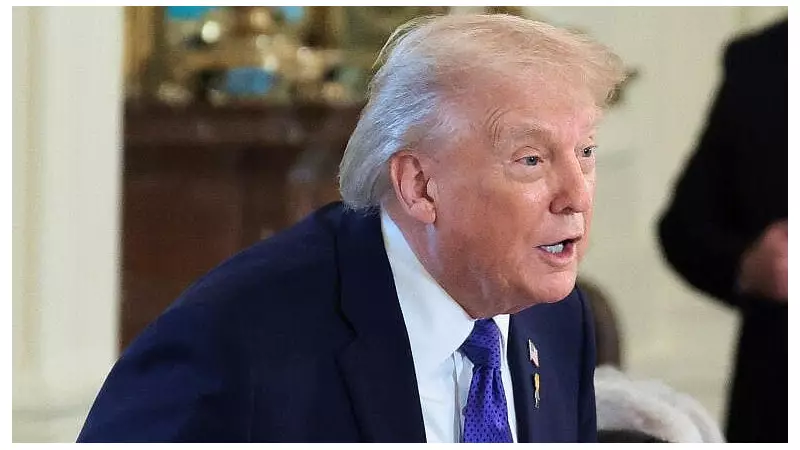
Former United States President Donald Trump has once again asserted that he played a decisive role in averting a significant military confrontation between India and Pakistan earlier this year. In a recent statement, Trump claimed the two nuclear-armed neighbors were on the brink of a major conflict which he helped to defuse.
The Repeated Assertion of Averting War
According to reports, Donald Trump has repeated this claim nearly 70 times since the incident. He stated that the situation in May was extremely volatile, suggesting that India and Pakistan "were ready to go at it big." The former president positions this as a key foreign policy achievement from his tenure, emphasizing his personal intervention and diplomatic influence to calm tensions.
Context and Timing of the Claim
The claim refers to events in May of this year, though specific operational details of the alleged crisis have not been independently detailed in the public domain. Trump's latest comments, made on January 9, 2026, continue a pattern of him highlighting this episode. His assertion underscores the perennial fragility of relations between New Delhi and Islamabad, which have a long history of conflict and rivalry over the Kashmir region.

Analysis and Regional Implications
While the exact nature of the alleged May escalation remains unclear, such claims bring international attention back to the security dynamics of South Asia. The region is home to two of the world's largest militaries, both possessing nuclear weapons. Any significant escalation carries global ramifications. Trump's repeated narrative highlights how third-party mediation, particularly from a power like the United States, is often cited as a crucial factor in de-escalating crises between the two nations. However, it also raises questions about the verification of such claims and their use in political discourse.
The ongoing repetition of this story by a major figure in American politics ensures that India-Pakistan relations remain a topic of global diplomatic discussion. It serves as a reminder of the constant need for dialogue and confidence-building measures to prevent any skirmish from spiraling into a larger conflict.