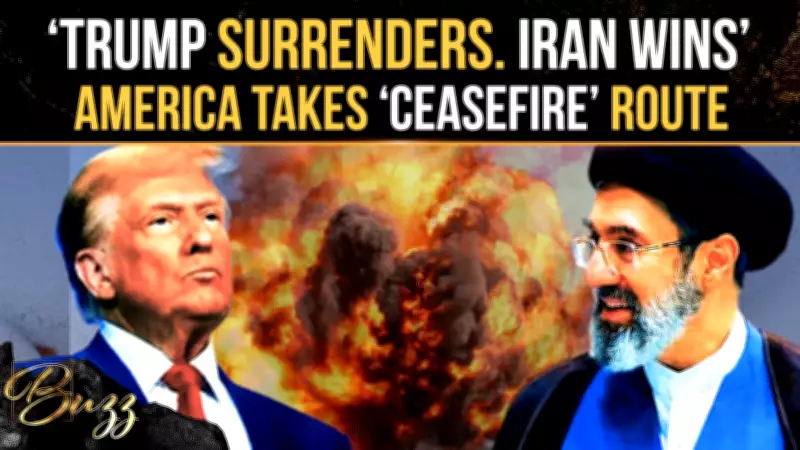
Trump's Dramatic Reversal: US Halts Iran Strikes After Ceasefire Agreement
In a stunning turn of events, US President Donald Trump has dramatically pulled back from launching military strikes against Iran, just hours before his own deadline expired. This sudden shift marks a significant de-escalation in the ongoing conflict that has involved both the United States and Israel since February of this year.
The Ceasefire Conditions and Strategic Demands
The decision to pause attacks targeting Iranian infrastructure comes with strict conditions that Tehran must meet. Iran is required to agree to a two-week ceasefire and ensure the reopening of the strategically crucial Strait of Hormuz. This narrow waterway serves as a key global oil route, through which approximately one-fifth of the world's petroleum passes.
This reversal is particularly notable given Trump's earlier warning that "a whole civilisation will die" if Iran failed to comply with US demands. The president's abrupt change in strategy has sparked intense debate and scrutiny both domestically and internationally.

Iran's Response and Declaration of Victory
Following the announcement, Iranian officials were quick to declare the development as a victory for their nation. The pause in military action is being framed by Tehran as a diplomatic triumph, suggesting that US aggression has been successfully countered through strategic positioning and negotiation.
This conflict escalation began in February when tensions between the US, Israel, and Iran reached new heights. The Strait of Hormuz had become a focal point of contention, with its potential closure threatening to disrupt global energy markets and trigger broader regional instability.
Global Implications and Political Fallout
The decision to de-escalate carries significant implications for Middle Eastern geopolitics and global security. Regional powers are closely monitoring how this ceasefire unfolds, particularly regarding whether Iran will fully comply with the terms set forth by the United States.
Meanwhile, President Trump faces considerable political backlash for what critics are calling an inconsistent foreign policy approach. The dramatic shift from threatening "civilisation" level consequences to implementing a temporary ceasefire has raised questions about the administration's strategic planning and crisis management capabilities.
As the two-week ceasefire period begins, international observers will be watching closely to see if this pause leads to more permanent diplomatic solutions or merely represents a temporary lull in hostilities. The reopening of the Strait of Hormuz will serve as an immediate test of Iran's commitment to the agreement, with global energy markets anxiously awaiting confirmation that this vital shipping lane has returned to normal operations.