

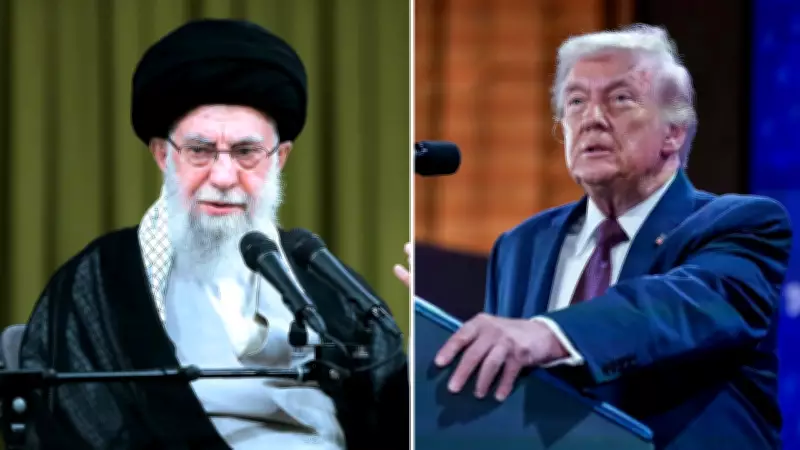
Multiple sources have revealed that US President Donald Trump is strongly leaning toward authorizing a major new military strike against Iran, which is led by Supreme Leader Ayatollah Ali Khamenei. This development comes after talks between Washington and Tehran aimed at curbing Iran's nuclear program and ballistic missile development failed to achieve meaningful progress, according to people familiar with the matter who spoke to CNN.
Regime Change Objectives and Protest Crackdown
Two US officials briefed on the discussions told Reuters that Trump's objective is to create conditions conducive to "regime change," specifically targeting the top leadership of the Islamic Republic. This stance follows Iran's violent suppression of nationwide protests earlier this month, which were sparked by economic distress and rising prices. The unrest was quelled through forceful measures, with reports indicating thousands of casualties.
According to the sources quoted by Reuters, Trump has been evaluating various options, including targeting Iranian commanders and institutions that the US holds responsible for the violence. The strategic aim, as described by officials, would be to embolden protesters and significantly weaken the Iranian government's capacity to maintain control over key security and administrative buildings.

Public Warnings and Military Posturing
Trump has issued public warnings to Tehran, emphasizing his stance on nuclear disarmament. In a post on Truth Social on Wednesday, he demanded that Iran return to the negotiating table to agree to "a fair and equitable deal – NO NUCLEAR WEAPONS." He further cautioned that any future US strike would be "far worse" than the operation conducted last June under Operation Midnight Hammer, when American forces targeted three Iranian nuclear sites.
Trump described recent US naval movements toward the region as an "armada" heading closer to Iran, highlighting the escalating military presence. According to CNN, Trump is considering a range of military options, including airstrikes aimed at Iran's leadership and security officials linked to the killings, as well as strikes on nuclear facilities and key government institutions. While no final decision has been made, Trump believes his military options have expanded with the arrival of a US carrier strike group in the region earlier this month.
Defensive Measures and Naval Deployment
Sources told CNN that Trump's planning on Iran also includes the potential deployment of one or more THAAD missile defense systems to the region, enhancing US defensive capabilities. The USS Abraham Lincoln Carrier Strike Group entered the Indian Ocean on Monday and continues to move closer to Iran, positioning itself to support potential military operations. This carrier group could assist in strikes and protect US allies in the region from possible Iranian retaliation.
Diplomatic Efforts and Iranian Warnings
Earlier this month, the US and Iran exchanged messages in an effort to ease tensions, with sources indicating mediation by Omani diplomats and direct communication between Trump's envoy Steve Witkoff and Iranian Foreign Minister Abbas Araghchi. These talks explored the possibility of a meeting to avert a US attack that Trump had threatened following the deaths of protesters.
In response to the escalating threats, Tehran has issued sharp warnings. Iranian officials have stated that the "heart of Tel Aviv" would be struck if the US attacks Iran. A senior adviser to Supreme Leader Ayatollah Ali Khamenei warned of an "unprecedented" retaliation against Israel in the event of any US military action, underscoring the regional risks involved.
Nuclear Program Concerns and Preconditions
It remains unclear why Trump has refocused attention on Iran's nuclear program, which he claimed last summer had been "obliterated" by US strikes. However, according to a person familiar with recent US intelligence, Iran has been attempting to rebuild its nuclear facilities deeper underground. Tehran has long resisted US demands to halt uranium enrichment and has also barred the UN's nuclear watchdog from inspecting its nuclear sites.

Amid the growing threat of military action, the US has set strict preconditions for any talks with Iran, sources said. These include a permanent end to uranium enrichment, new limits on Iran's ballistic missile program, and a halt to support for Iranian proxy groups across the region.
Negotiation Stalemate and Key Obstacles
The main obstacle in negotiations, according to sources, has been Washington's demand that Iran accept limits on the range of its ballistic missiles—a major concern for Israel, which depleted much of its missile interceptor stockpile while defending against Iranian attacks during last June's 12-day war. Iran has rejected this demand and informed the US that it would discuss only its nuclear program. The US has not responded, leaving negotiations at a standstill, the sources concluded.





