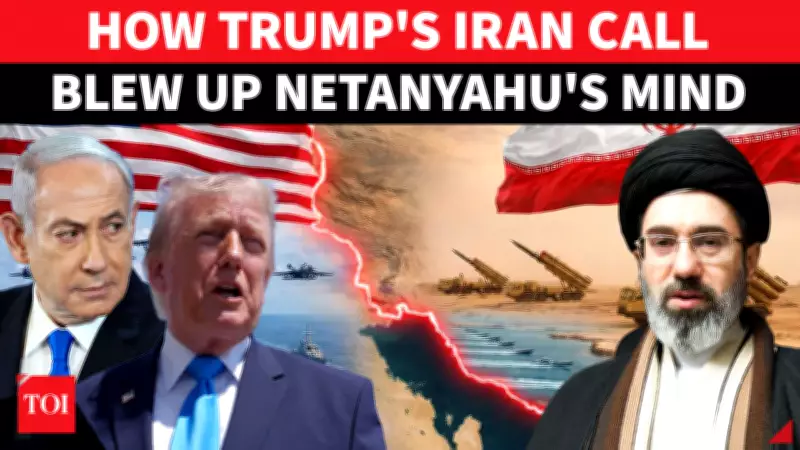
US President Donald Trump and Israeli Prime Minister Benjamin Netanyahu are reportedly facing growing disagreements over how to handle Iran, even as diplomatic efforts to ease tensions continue. According to an Axios report, the two leaders held a tense phone call amid renewed negotiations involving the United States, Iran, and regional mediators including Qatar, Pakistan, Saudi Arabia, Turkey, and Egypt.
Diverging Approaches
While Trump has publicly stated that a deal with Iran remains possible, Netanyahu is reportedly more supportive of continued military pressure on Tehran. The Israeli leader has been a vocal opponent of any agreement that does not completely dismantle Iran's nuclear program. Trump, on the other hand, has expressed willingness to explore diplomatic solutions, leading to friction between the two allies.
Iran's Response
Tehran has confirmed that it is reviewing the latest proposal but insists any agreement must include concessions related to sanctions and the release of frozen Iranian funds. The Islamic Republic has faced severe economic pressure due to US sanctions, and the release of assets is a key demand in negotiations.

Regional Mediation
The talks involve multiple regional players, reflecting the complexity of the situation. Qatar, Pakistan, Saudi Arabia, Turkey, and Egypt have all played roles as mediators, seeking to bridge the gap between Washington and Tehran. The involvement of these countries underscores the broader geopolitical stakes in the region.
Background of Tensions
The relationship between Trump and Netanyahu has been historically close, with the US president taking a hard line on Iran during his previous term. However, recent developments suggest a shift in strategy, with Trump seeking a legacy-making deal while Netanyahu prioritizes security concerns. The phone call described in the Axios report highlights the growing strain, with sources describing the conversation as 'tense' and 'frustrating' for both leaders.
Military Posturing
Netanyahu has consistently advocated for a military option against Iran, arguing that diplomacy has failed in the past. Israel has conducted airstrikes on Iranian-linked targets in Syria and has been accused of sabotaging Iran's nuclear facilities. Trump, however, has been reluctant to commit to military action, preferring to use economic pressure and diplomacy.
What's Next?
The coming weeks will be crucial as negotiations continue. The US and Iran are expected to hold further talks, with the possibility of a framework agreement emerging. However, the rift between Trump and Netanyahu could complicate matters, as Israel wields significant influence in Washington. The outcome of these discussions will have far-reaching implications for the Middle East and global security.