

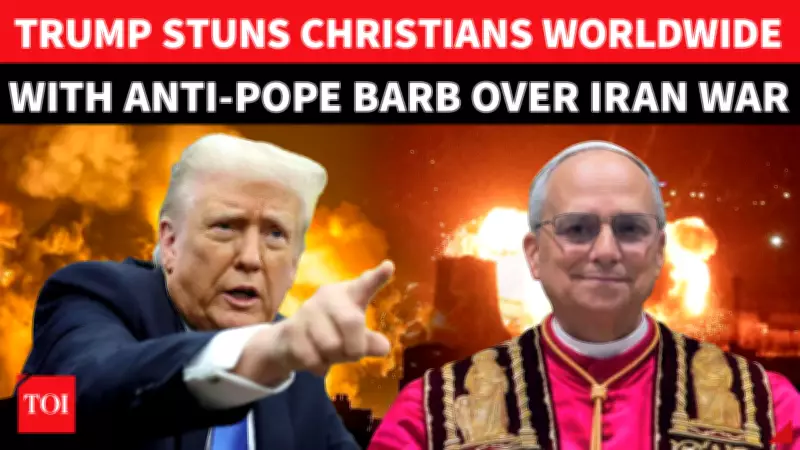
Trump Launches Verbal Assault on Pope Leo Over Iran Nuclear Weapons Position
In a fresh diplomatic controversy, former U.S. President Donald Trump has unleashed a sharp attack on Pope Leo, criticizing the pontiff's stance on nuclear weapons and the ongoing Middle East conflict. Trump labeled the Pope as "very liberal" and expressed strong disapproval of his views, sparking international attention and debate.
Pope Leo's Call for Peace Amid Escalating Tensions
The Pope's comments that triggered Trump's response were delivered during a prayer service at St. Peter's Basilica. Pope Leo condemned what he described as a "delusion of omnipotence" driving the U.S.-Israel war on Iran, urging global leaders to halt military escalation and pursue peace through dialogue and negotiation.
This appeal for de-escalation came at a critical juncture, coinciding with rare face-to-face negotiations between the United States and Iran in Islamabad. These talks are occurring under a fragile ceasefire, adding urgency to the Pope's message of diplomatic resolution.

Trump's Specific Criticisms and Broader Context
Trump's attack specifically targeted the Pope's position on nuclear weapons, with the former president stating he doesn't approve of "who says it's okay to have nuclear weapon." This remark appears to reference the Pope's broader calls for nuclear disarmament and peaceful conflict resolution in the region.
The timing of Trump's comments is particularly significant as they emerge alongside multiple developments in the Iran conflict:
- Iran has issued warnings about the Strait of Hormuz being "non-negotiable"
- Pro-Iran Hezbollah forces have launched attack drones into northern Israel
- U.S.-Iran talks in Islamabad have stalled over key disputes
- Iran has ridiculed Trump and his administration after negotiations failed to produce immediate results
Regional Implications and Military Posturing
The verbal exchange between Trump and Pope Leo occurs against a backdrop of heightened military activity. Trump has reportedly dispatched two destroyers to the Strait of Hormuz, while Iran has warned of a "forceful response" to any aggression. Meanwhile, Israeli Prime Minister Netanyahu has threatened to bomb Iran's nuclear sites, creating additional pressure on diplomatic efforts.
These developments highlight the complex interplay between religious leadership, political rhetoric, and military strategy in one of the world's most volatile regions. The Pope's intervention represents a significant religious voice in geopolitical affairs, while Trump's response underscores the continuing influence of his political perspective on international discourse.
The situation remains fluid, with negotiations continuing despite setbacks, and the world watches closely as religious, political, and military forces converge around the Iran nuclear question and broader Middle East stability.






