

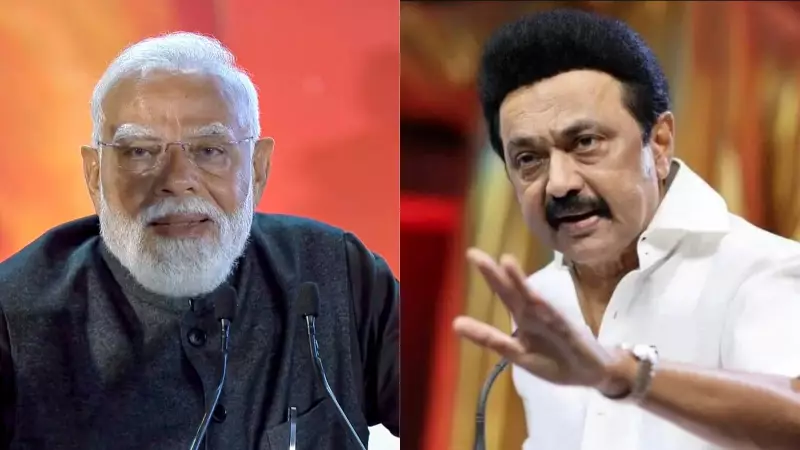
Why Stalin's Letter to Modi on Sri Lanka Matters Now
Tamil Nadu Chief Minister M K Stalin has sent a strongly worded letter to Prime Minister Narendra Modi. He raises urgent concerns about the future of Tamil people in Sri Lanka. Stalin writes this letter at a critical moment. Sri Lanka is preparing a new constitution under President Anura Kumara Dissanayake.
A Direct Appeal at a Sensitive Time
Stalin bases his appeal on Tamil Nadu's deep historical and cultural ties with Sri Lankan Tamils. He describes this as a matter of profound concern. The Chief Minister states it is his duty to bring this issue to Modi's attention. He writes after receiving detailed representations from Tamil leaders in both India and Sri Lanka.
Stalin demands direct intervention from India. He notes that New Delhi has recently shown diplomatic restraint. However, he argues this moment requires more active involvement. The letter grounds its appeal in emotional and political realities.

The Core Warning in Stalin's Letter
At the heart of Stalin's warning lies a clear fear. He believes Sri Lanka is moving toward constitutional change once again. This change may not address the structural causes of Tamil marginalization. Stalin traces this problem back to the island's post-independence foundations.
He emphasizes Sri Lanka's constitutional history in his letter. Stalin points to the Constitutions of 1947, 1972, and 1978. All these documents rooted Sri Lanka in a unitary state structure. This framework, he argues, enabled planned ethnic violence and structural oppression.
Stalin writes that Tamils have endured systematic discrimination for over seventy-seven years. He describes attempts to curb their genuine rights. Many people call this a genocide against the Tamil community. Even after the civil war ended, the unitary framework continued.
This framework allowed demographic changes and land grabs. It also caused erosion of Tamil identity in their traditional homelands. Stalin presents these facts with measured language but stark implications.
The Immediate Trigger for the Letter
The current constitutional exercise in Colombo triggers Stalin's letter. He cautions that the Sri Lankan government holds an absolute majority in Parliament. This government accelerates efforts to introduce a new constitution.
Stalin warns that the proposed framework appears to reinforce a unitary state model again. He uses the term 'Ekkiyarajya' to describe this model. This approach threatens to further marginalize Tamils. It ignores their legitimate aspirations for political autonomy.
Stalin suggests this issue is not simply a Sri Lankan domestic matter. India cannot afford to treat it as distant. He invokes India's past role in the island's conflict. This includes the Indo-Sri Lanka Accord. Stalin argues New Delhi has both responsibility and leverage in this situation.
He writes that India has a moral and strategic imperative to act. As a regional power, India maintains a longstanding commitment to peace and justice in Sri Lanka.
Reviving the Thimpu Principles
A central feature of Stalin's letter is the revival of the Thimpu Principles. These principles emerged during talks facilitated by India in 1985. Stalin lists them clearly without any dilution.
The principles include several key points:
- Recognition of Sri Lankan Tamils as a distinct nation
- Acknowledgment of Northern and Eastern Provinces as traditional Tamil homeland
- Affirmation of the right to self-determination for the Tamil nation
- Establishment of a federal system ensuring equality and non-discrimination
- Full citizenship rights for hill-country Tamils
Stalin warns that any new constitution must incorporate these elements. Without them, the constitution risks perpetuating injustice and instability. This could lead to renewed conflict and humanitarian crises. Constitutional cosmeticism might reopen wounds that never fully healed.
Why This Letter Carries Political Weight
The letter gains significance through its timing and audience. By addressing Modi directly, Stalin places the Sri Lankan Tamil question within India's national diplomatic priorities. He moves it beyond Tamil Nadu's emotional landscape.

Stalin frames federalism abroad as an extension of constitutional values at home. He writes that India should press for federal arrangements in Sri Lanka. These arrangements must devolve power to provinces and protect ethnic minority rights.
Such a stand would align with India's constitutional values. It reflects principles of federalism and protection of linguistic and ethnic minorities. The letter is unusually comprehensive for a chief minister's communication on foreign affairs.
Stalin signals an attempt to shape New Delhi's Sri Lanka policy. He acts at a moment when Colombo is still drafting its constitutional vision. The letter also reflects political realities within Tamil Nadu.
The fate of Sri Lankan Tamils remains a deeply felt issue across party lines in Tamil Nadu. Stalin writes that millions in Tamil Nadu view Sri Lankan Tamils as kin. Any deterioration could carry broader implications for bilateral relations and regional stability.
In closing, Stalin strikes a note of cautious expectation rather than confrontation. He expresses confidence that under Modi's leadership, India will take proactive steps. These steps should safeguard the rights of Sri Lankan Tamils. They should contribute to a just and lasting resolution.
The letter represents a significant diplomatic move by the Tamil Nadu Chief Minister. It comes at a crucial juncture in Sri Lanka's constitutional process. Stalin's intervention highlights ongoing concerns about Tamil rights and federal solutions in the region.





