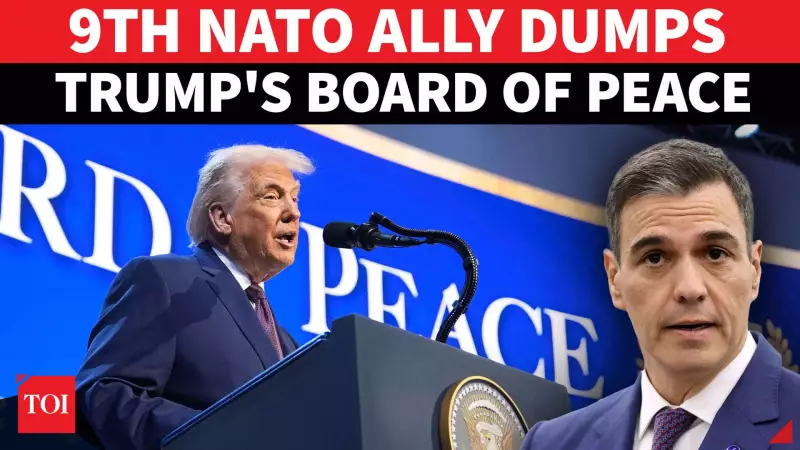
Spain's Sanchez Rejects Trump's Board Of Peace After 'NATO Piggyback' Attack
In a significant diplomatic move, Spain has firmly rejected U.S. President Donald Trump's newly unveiled Board of Peace, declining participation in the initiative announced at the World Economic Forum in Davos. Spanish Prime Minister Pedro Sánchez articulated that this decision underscores Madrid's unwavering commitment to multilateralism, international law, and the United Nations framework.
Fundamental Flaws and Exclusion Concerns
Sánchez pointed to what he described as fundamental flaws in Trump's proposal, notably the exclusion of the Palestinian Authority from the board. This omission, according to the Spanish leader, undermines the initiative's credibility and effectiveness in fostering Middle East stability. The rejection comes amid Trump publicly criticizing Spain over its NATO defence spending, a move that Sánchez labeled as a 'piggyback' attack to pressure European allies.
Rising Transatlantic Tensions
In Brussels, Sánchez accused the United States of disregarding international law and warned of escalating transatlantic tensions. He emphasized that Spain will not tolerate any attempts to decide Greenland's future through pressure or coercion, reinforcing the nation's stance on sovereignty and diplomatic integrity. As Europe grapples with debates over unity, defence, and sovereignty, Spain's refusal highlights a growing divide within the international community.

Global Diplomatic Reshaping
The move signals a broader skepticism towards Trump's global initiatives and their potential to reshape diplomacy. While many of Washington's closest allies have also stayed away from the Board of Peace, Spain's vocal opposition underscores the challenges Trump faces in garnering international support. This development raises critical questions about the future of U.S.-European relations and the willingness of nations to align with unilateral approaches.
As the situation unfolds, Spain's firm red line serves as a reminder of the importance of inclusive, law-based international cooperation in addressing global conflicts and promoting peace.