South Korean Intelligence Firmly Labels Kim Jong Un's Daughter as Heir Apparent
In a significant development regarding North Korea's future leadership, South Korea's National Intelligence Service (NIS) has declared it is now reasonable to view the teenage daughter of Supreme Leader Kim Jong Un as his designated successor. This assessment, delivered during a closed-door briefing at the National Assembly on Monday, represents the agency's most definitive statement to date on the rising political status of the young girl, who could potentially extend her family's dynastic rule into an unprecedented fourth generation.
From Speculation to Official Assessment
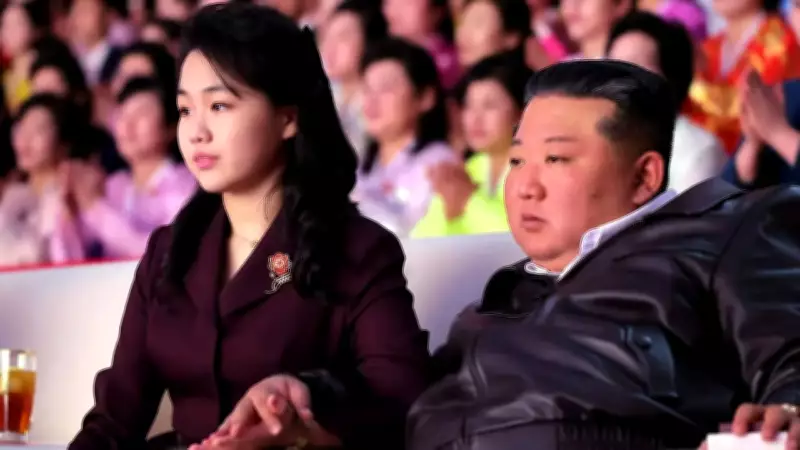
The girl, whom state media has referred to as Kim's "most beloved" or "respected" child, has been a constant companion to her father at numerous high-profile public events since late 2022. These appearances have fueled intense international speculation about her being groomed as North Korea's next leader. According to lawmaker Lee Seong Kweun, who attended the confidential briefing, NIS Director Lee Jong-seok explicitly stated in response to lawmakers' questions that the girl could indeed be considered Kim Jong Un's successor.
This marks a notable escalation in the NIS's official position. Earlier in 2024, the agency had described her as her father's likely heir, which was its first official acknowledgment of her potential grooming. By February of this year, the assessment had evolved further, with the NIS indicating it believed she was close to being formally designated as the country's future leader.

Addressing the Question of Kim Yo Jong's Role
When questioned about possible objections from Kim Jong Un's powerful sister, Kim Yo Jong—long regarded as the regime's second-in-command—Director Lee reportedly responded that she holds no substantial powers. Lawmaker Lee conveyed this detail during a subsequent briefing, citing the NIS's reference to unspecified "reliable intelligence" sources. This clarification underscores the shifting dynamics within the North Korean leadership structure, suggesting a deliberate sidelining of Kim Yo Jong in favor of the younger generation.
Building Military Credentials and Public Image
The NIS briefing also shed light on the strategic nature of the girl's recent public engagements. Lawmaker Lee reported that North Korean authorities appear to have orchestrated events such as her driving a tank during army training supervised by her father and their joint pistol-firing at a light munitions factory visit. According to the intelligence agency, these activities are designed to build up her military credentials and actively "reduce skepticism about a woman successor" within North Korea's traditionally male-dominated society.
Another lawmaker present at the briefing, Park Sunwon, echoed similar observations regarding the calculated nature of these military-themed appearances, reinforcing the NIS's analysis of a concerted effort to legitimize her future leadership role.
Controversy and Historical Context
Despite the NIS's strong assessment, some external observers remain skeptical. Critics argue that North Korea's extremely male-centered societal norms make it unlikely for the country to embrace a female leader. Additionally, they point out that Kim Jong Un, at 42 years old, is considered relatively young to name a successor, a move that could potentially undermine his current grip on power by creating a rival center of authority.
The girl is widely believed to be named Kim Ju Ae and is approximately 13 years old, though North Korean state media has never officially confirmed these personal details. The reported name originates from an account by former NBA star Dennis Rodman, who recalled holding Kim Jong Un's infant daughter during a visit to Pyongyang in 2013.
Established in 1948, North Korea has been ruled exclusively by male members of the Kim family across three generations: founder Kim Il Sung (until 1994), his son Kim Jong Il (until 2011), and currently his grandson Kim Jong Un. The potential elevation of Kim Ju Ae would mark a historic departure from this patriarchal lineage, introducing a female heir into the succession plan for the first time in the nation's history.