South Korea Issues Formal Apology for Drone Incursion into North Korean Territory
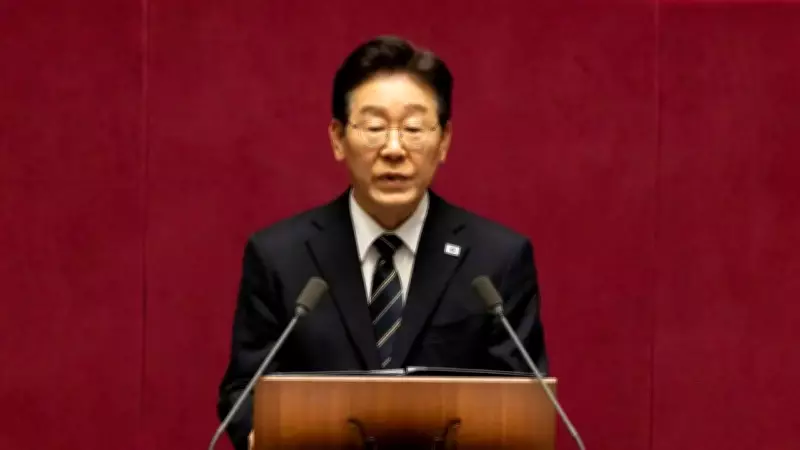
In a significant diplomatic development, South Korean President Lee Jae Myung expressed profound regret to Pyongyang on Monday concerning the unauthorized dispatch of drones into North Korean airspace earlier this year. President Lee characterized these actions as "irresponsible and reckless", marking a stark reversal from Seoul's initial position on the controversial incident.
From Denial to Admission: Seoul's Shifting Stance on the Drone Incident
Following the drone incursion in January, South Korean authorities had categorically denied any official involvement, instead suggesting that civilian actors might be responsible. However, President Lee revealed that a subsequent, thorough investigation uncovered the direct participation of government personnel. "It has been conclusively confirmed that a National Intelligence Service official and an active-duty soldier were involved in this operation," Lee stated during a cabinet meeting, directly linking state actors to the breach.
Escalating Tensions and Pyongyang's Stern Warning
The incident had previously triggered a severe warning from North Korea in February, which threatened a "terrible response" if any further drones were detected crossing the border from the South. This ultimatum compelled Seoul to launch a comprehensive internal probe into the allegations. Pyongyang had asserted that it successfully downed a drone equipped with surveillance equipment in early January, releasing state media photographs depicting the wreckage of a winged aircraft scattered across terrain, accompanied by grey and blue components alleged to include cameras.

President Lee's Diplomatic Outreach and Critique of Predecessor
President Lee emphasized that the objective of his apology was to mitigate unnecessary military tensions exacerbated by the actions of the involved individuals. Since assuming office last year, Lee has actively pursued a policy of rapprochement with North Korea, striving to mend strained inter-Korean relations. In this context, he has openly criticized his predecessor for allegedly authorizing similar drone missions to disseminate propaganda leaflets over Pyongyang, underscoring his administration's contrasting approach to diplomacy and cross-border engagement.
The admission and apology represent a pivotal moment in inter-Korean relations, highlighting the complexities of military oversight and the ongoing efforts to foster stability on the Korean Peninsula amidst historical tensions and mutual suspicions.