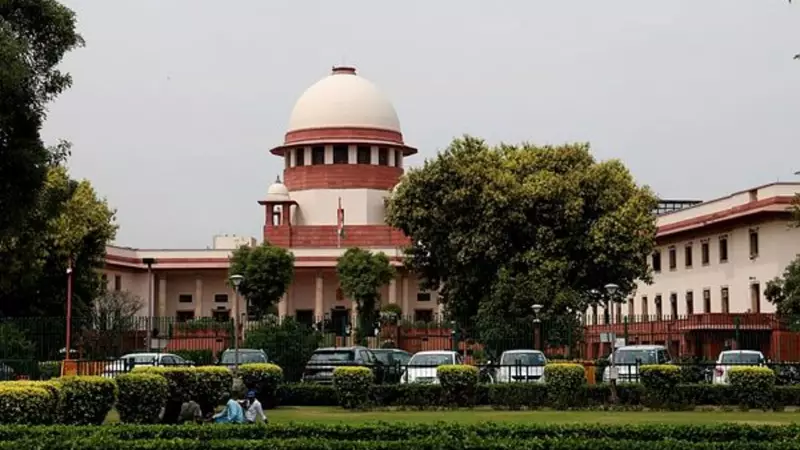
The Supreme Court of India voiced strong support for Delhi's new school fee regulation law on Monday. The court described private school fees in the capital as phenomenally high. However, the judges warned against a hurried and retrospective implementation of the legislation.
Court Backs Law but Questions Timing
Justice Narasimha, presiding over a two-judge bench, made the court's position clear. "We are completely in favour of the legislation," he stated. He emphasized that this legislation serves public welfare. The judge acknowledged the issue of excessively high fees in private schools.
Yet, Justice Narasimha expressed concerns about rushing the process. "Hurry may end up not properly constituting the committees," he cautioned. He worried that anxiety to implement the law could create institutions that are not viable.

Retrospective Application Draws Criticism
The Delhi government pointed out that the law has been implemented from this year. Justice Narasimha responded sharply to this claim. "This year has already started. This is completely convoluted," he remarked.
The judge noted that the approval should have been done by July. That deadline has already passed. "What is the over anxiety here?" he questioned. He argued that forcing people to act overnight makes the process unviable.
Justice Narasimha called the Act very ideal and done for a good purpose. He urged the government to implement it in a proper way. The Act itself talks about next year, but the government is trying to start from this year retrospectively.
Legal Challenge from School Managements
The bench, which also included Justice Alok Aradhe, was hearing appeals from school managements. These schools moved the top court after the Delhi High Court refused to stay the legislation. The High Court also refused to stay the rules and a circular issued on December 24, 2025.
That circular directed schools to set up a School Level Fee Regulation Committee by January 10. It also required schools to submit fee proposals by January 25. The new law officially came into effect on December 10, 2025.
On January 8, the High Court had issued notices on petitions challenging the constitutional validity of the Act and the circular. It extended the time for constituting committees for the academic year 2025–26 till January 20. The deadline for fee proposals was pushed to February 5.
Arguments from Both Sides
Senior advocate Mukul Rohatgi appeared for the school managements. He contended that the Act was repugnant to the Delhi School Education Act of 1973, which was enacted by Parliament. Rohatgi argued that it should not have been implemented for the current academic year.
He pointed out a key issue. The Act came into effect only on December 10, 2025. Yet the circular sought to fix fees through committees for the current academic year, which began on April 1, 2025. This created a retrospective application problem.
Additional Solicitor General S V Raju appeared for the Directorate of Education. He referred to proceedings before the High Court. Raju stated that the timelines were extended on the request made by the schools themselves.
Court's Limited Intervention
The Supreme Court clarified its stance on intervention. The court said it will intervene only on the point of retrospective application. Justice Narasimha explained the court's thinking.
"If it is innocuous, merely saying the constitution of the committee, there is no harm in that," he said. However, if it imposes fees retrospectively for 2025-2026, that becomes problematic. The court stated it would interfere only if the government's intention is to regulate fees for the current academic year.
The court will hear the matter again on January 27. This gives both sides time to prepare their arguments further.
Background of the Legislation
A key provision of the law mandates a three-tier committee structure. This structure is designed to audit fee hikes in private schools. The legislation comes after years of friction between parent associations and private schools over arbitrary charges.
Parents have long complained about sudden and unexplained fee increases. School managements have argued that they need funds to maintain quality education and infrastructure. The new law aims to bring transparency and regulation to this contentious issue.

The Supreme Court's comments highlight the delicate balance between regulating fees and ensuring practical implementation. While supporting the law's intent, the court stresses the importance of proper procedural follow-through.