



US Designates Saudi Arabia as Major Non-NATO Ally in $1 Trillion Deal
Saudi Arabia Becomes US Major Non-NATO Ally

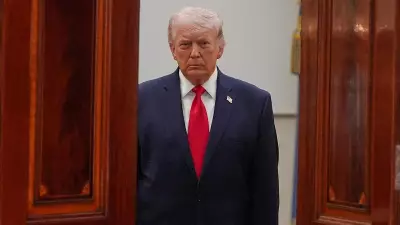
In a dramatic White House dinner that blended celebrity glamour with high-stakes diplomacy, President Donald Trump formally designated Saudi Arabia as a Major Non-NATO Ally (MNNA), marking a transformative reset in US Middle East policy. The historic announcement came after Saudi Crown Prince Mohammed bin Salman committed to a staggering nearly $1 trillion investment in the United States, cementing personal ties between the leaders into strategic alignment.

A Star-Studded Affair with Serious Consequences

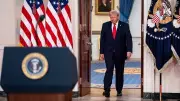
The black-tie dinner at the White House's East Room on Tuesday night featured an unprecedented gathering of tech titans, finance moguls, and global celebrities. President Trump had wheeled in Tesla CEO Elon Musk, while Prince Salman summoned football legend Cristiano Ronaldo. However, the celebrity optics were overshadowed by the monumental geopolitical announcement that could reshape Middle Eastern alliances for decades to come.

Among the 140 distinguished guests were Apple CEO Tim Cook, Nvidia CEO Jensen Huang, Open AI President Greg Brockman, IBM CEO Arvind Krishna, and Citigroup CEO Jane Fraser. The heavy representation from technology and finance sectors underscored the comprehensive nature of the emerging US-Saudi partnership.

What MNNA Status Means for Saudi Arabia

The Major Non-NATO Ally designation places Saudi Arabia on par with Israel in terms of accessing military and economic privileges from the United States. While 20 countries including Pakistan, Kenya, Tunisia, and Brazil already hold this status, Saudi Arabia's elevation represents a fundamental shift in America's regional strategy.

President Trump described the move as a quantum leap in military cooperation that will facilitate the sale of cutting-edge American weapons like the F-35 fighter jets. The partnership will extend to collaboration in civil nuclear technology, critical minerals extraction, and artificial intelligence development.

The White House fact sheet framed the MNNA designation and accompanying agreements as part of an America First strategy that will fill US coffers and stimulate economic growth. A sweeping Strategic Defense Agreement specifically secures new burden-sharing funds from Saudi Arabia to offset American defense costs while making it easier for US defense firms to operate within the kingdom.

Overcoming Historical Baggage

The elevated partnership represents a remarkable rehabilitation for Saudi Arabia, which has long been viewed with suspicion in Washington due to its nationals' involvement in the 9/11 attacks and what critics describe as its medieval social outlook. The Crown Prince has actively worked to overcome this perception through modernization efforts and now through this massive financial commitment to the United States.

During the dinner, Prince Salman wore traditional Arab dishdasha and ghutra, joking that betters who wagered he would wear a black suit would lose money. He responded gracefully to President Trump's repeatedly touchy-feely outreach that broke royal protocol prohibiting physical contact with the prince.

The $1 Trillion Question

The trillion-dollar investment pledge, significantly increased from the $600 billion announced just months earlier, has drawn both enthusiasm and skepticism. Critics question how Saudi Arabia, with a GDP of just $1.1 trillion, can manage such massive overseas investments. However, supporters point to the Saudi Public Investment Fund (PIF), one of the world's largest sovereign wealth funds with over $1 trillion in assets under management.

This enormous commitment is expected to affect Saudi investment pledges worldwide, including in India where the PIF recently increased its commitment from $10 billion to $100 billion. The reallocation of resources toward the United States may force Riyadh to scale back other international investment plans.

Geopolitical Reverberations

The strengthened US-Saudi alliance is bound to cause significant geopolitical waves far beyond the Middle East, potentially affecting relationships with both India and China. Both Asian powers have invested heavily in ties with Gulf monarchies in recent years, with the region serving as a key theater for China's Belt and Road ambitions.

Washington's embrace of Riyadh and existing partnership with Islamabad represents a partial dilution of Beijing's influence in the region. The movement of Saudi Arabia and its vassal states deeper into the US defense ecosystem creates new strategic realities that global powers will need to navigate carefully in the coming years.

The White House dinner may have ended, but the consequences of this newly fortified alliance will echo through international relations, global economics, and regional security arrangements for the foreseeable future.