US Economist Jeffrey Sachs Calls on Modi, Xi, and Putin to Avert Iran Conflict
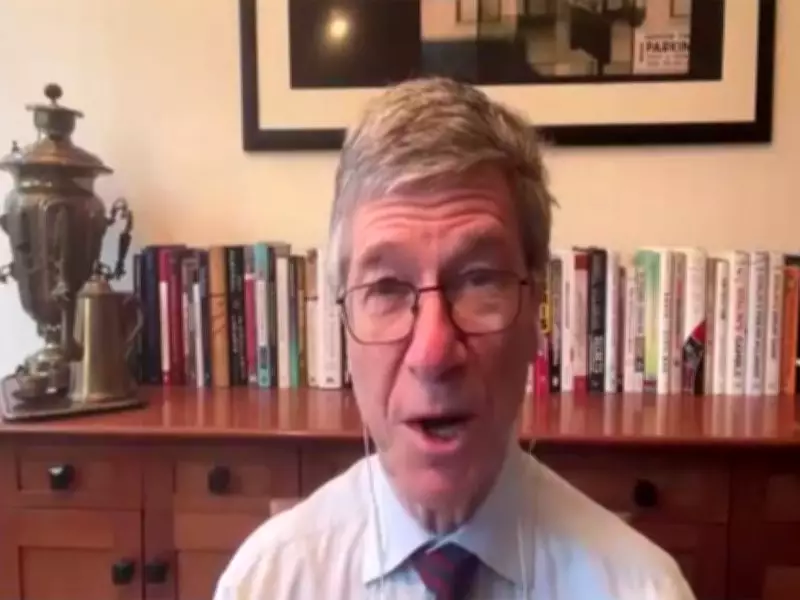
In a significant statement, renowned US economist Jeffrey Sachs has emphasized that only powerful global leaders, including India's Prime Minister Narendra Modi, China's President Xi Jinping, and Russia's President Vladimir Putin, possess the diplomatic clout to prevent a potential war involving Iran. Sachs, a professor at Columbia University and a prominent voice in international affairs, highlighted the urgent need for high-level intervention to de-escalate tensions in the Middle East.
Diplomatic Influence of Key Nations
Sachs pointed out that these three nations—India, China, and Russia—hold substantial sway in global politics and have maintained varying degrees of engagement with Iran. He argued that their collective efforts could bridge divides and foster dialogue, reducing the risk of military confrontation. The economist stressed that traditional Western powers alone may not suffice in resolving such complex geopolitical crises, making the role of these leaders crucial.
India's Strategic Position: Prime Minister Modi's government has historically balanced relations with multiple stakeholders in the region, including Iran and Western countries. Sachs noted that India's growing economic and diplomatic stature could serve as a neutral mediator, facilitating peace talks and promoting stability.

China's Economic Leverage: President Xi Jinping's China, as a major trade partner and investor in Iran, wields significant economic influence. Sachs suggested that China could use this leverage to encourage diplomatic solutions, aligning with its broader foreign policy goals of non-interference and regional cooperation.
Russia's Military and Political Role: President Putin's Russia has longstanding ties with Iran, particularly in defense and energy sectors. Sachs highlighted that Russia's involvement could help mitigate security concerns and provide a counterbalance to Western pressures, potentially paving the way for negotiated settlements.
Global Implications and Urgent Calls
The potential for conflict in Iran carries profound global implications, including risks to oil supplies, regional stability, and international security. Sachs warned that without proactive diplomacy led by figures like Modi, Xi, and Putin, the situation could escalate into a broader war, affecting economies and peace worldwide. He urged these leaders to prioritize dialogue over confrontation, leveraging their unique positions to broker peace.
In his analysis, Sachs underscored the importance of multilateral approaches in today's interconnected world. He called for renewed efforts in international forums, such as the United Nations, to address the Iran issue collaboratively, with Modi, Xi, and Putin at the forefront of such initiatives.
This perspective from Jeffrey Sachs adds to ongoing debates about global leadership and conflict resolution, highlighting the shifting dynamics of power where non-Western nations play increasingly pivotal roles in maintaining world peace.