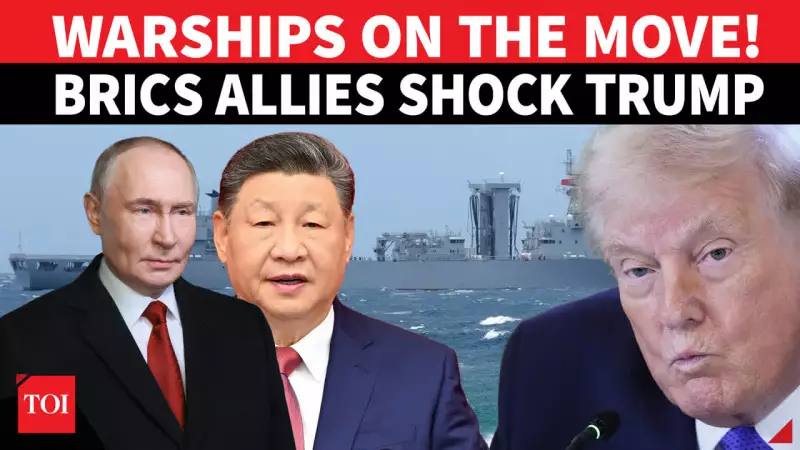
In a significant geopolitical move, warships from Russia, China, and Iran have arrived in South Africa to participate in joint naval drills under the BRICS+ framework. The exercises, commencing on January 10, 2026, have immediately heightened international tensions, drawing sharp criticism from the United States under President Donald Trump.
A Week of 'Will for Peace' Amid Rising Storms
The week-long maritime exercises, officially named "Will for Peace," are scheduled to focus on critical areas of cooperation. These include enhancing maritime safety protocols, conducting complex joint operational maneuvers, and developing strategies to protect vital international shipping lanes. While framed as a routine collaborative effort, the participation of three major powers often at odds with the West has transformed these drills into a potent symbol of shifting global alliances.
Analysts point out that the event marks a strategic projection of power by the BRICS nations into the African continent. The choice of South Africa as the host is particularly symbolic, positioning the nation at the crossroads of competing international interests.

Domestic Protests and International Balancing Act
The drills have not been without controversy on the ground. Ukrainian expatriates in South Africa staged protests, vehemently opposing Russia's involvement in light of the ongoing conflict. Simultaneously, South African activist groups seized the moment to condemn recent U.S. military operations in Venezuela, calling for the release of President Nicolás Maduro.
This domestic dissent underscores the delicate position of the South African government. Experts warn that Pretoria risks being caught in a difficult squeeze between longstanding diplomatic and economic pressures from the United States and its growing commitments to alliances within the Global South.
Economic and Geopolitical Tightrope for South Africa
The situation presents South Africa with a formidable balancing act, both economically and geopolitically. Hosting the exercises strengthens its ties within the BRICS bloc but inevitably invites increased scrutiny and potential repercussions from Western capitals. The move is seen as a test of the nation's foreign policy autonomy amid a rapidly fragmenting world order.
Critics of the exercises have raised a fundamental question: why is a bloc originally conceived as an economic coalition engaging in overt military cooperation? This question gains further weight given the internal political tensions and differing strategic goals among the participating nations themselves.
As the warships conduct their maneuvers, the world watches closely. The "Will for Peace" exercises have, ironically, become a flashpoint, revealing the deepening fissures in international relations and the complex choices facing emerging powers like South Africa.