

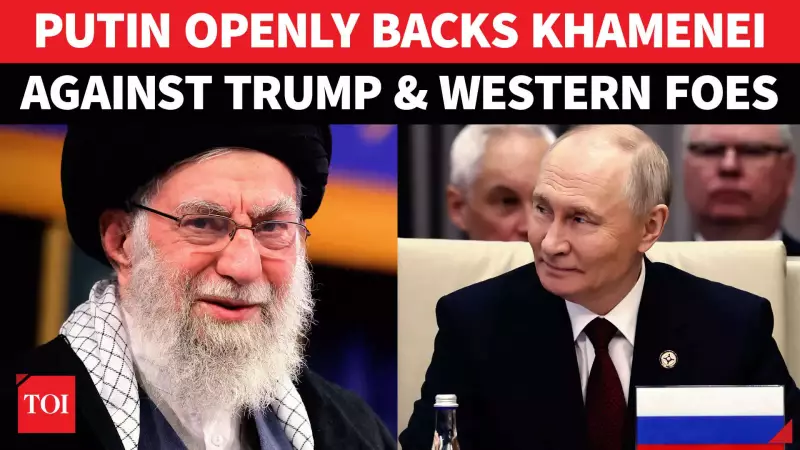
Russian President Vladimir Putin has voiced firm support for Iran's leadership amid widespread demonstrations across the country. In a recent telephone conversation with Iranian President Masoud Pezeshkian, Putin emphasized Moscow's backing for Tehran's government.
Putin Praises Iranian Leadership
During their discussion, Putin commended Iran's Supreme Leader Ayatollah Ali Khamenei and the current administration. He described massive public marches in Iran as reflecting the nation's genuine stance. Putin outright rejected assertions that these protests signify popular opposition to the state.
Foreign Interference Allegations
Putin pointed to external forces as the primary instigators of the unrest. He specifically mentioned Israel and the United States, accusing them of backing the rioters. The Russian leader characterized the situation as resembling a "color revolution," a term often used to describe foreign-supported political upheavals.

"Moscow is closely monitoring developments," Putin stated, according to the Iranian president's office. He acknowledged that prolonged international sanctions have imposed economic and social hardships on Iran. However, he strongly condemned violent riots, attacks on state and religious institutions, and assaults on security personnel.
Criticism of Trump's Threats
In his remarks, Putin also took aim at former U.S. President Donald Trump. He criticized Trump's recent threats of military action against Iran, labeling them as provocative and unhelpful. This criticism comes amid escalating tensions in the region.
Iran's Response and Regional Implications
The Iranian government welcomed Putin's expressions of solidarity. This show of support strengthens the diplomatic ties between Moscow and Tehran. It also highlights Russia's strategic interests in the Middle East.
Analysts suggest that Putin's statements aim to counter Western influence in Iran. By backing the Iranian leadership, Russia positions itself as a reliable ally against perceived American and Israeli pressures. The ongoing protests in Iran have drawn international attention, with various countries taking differing stances on the internal situation.
Putin's comments underscore the geopolitical complexities surrounding Iran. They reflect broader power struggles in the region, where global powers vie for influence. The Russian president's firm stance is likely to resonate with other nations critical of Western interventionism.
As the situation evolves, international observers will watch how this Russian support impacts Iran's domestic politics and its foreign relations. The alignment between Moscow and Tehran could shape future diplomatic and military dynamics in the Middle East.






