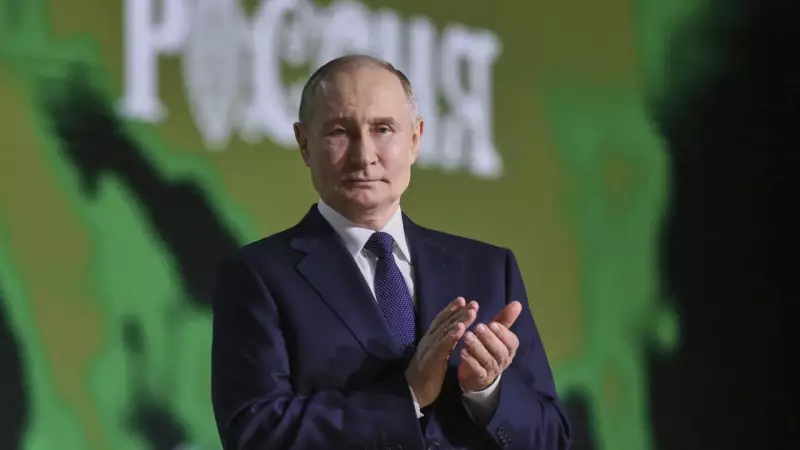
In a significant escalation of global nuclear tensions, Russian President Vladimir Putin has instructed his government to prepare proposals for the potential resumption of nuclear weapons testing, a move Moscow has avoided since 1991. The directive, issued during a security council meeting on Thursday, comes as a direct response to the United States' announcement of its own planned resumption of nuclear tests.
Preparing for "Any Eventuality"
President Putin declared that Russia must "be prepared for any developments" while simultaneously affirming that the nation remains "ready to discuss strategic stability with the United States." This dual approach highlights the precarious state of US-Russia relations, which have deteriorated to a new low amidst the ongoing war in Ukraine.
The order was given after parliamentary speaker Vyacheslav Volodin raised questions about how Moscow should respond to US President Donald Trump's recent statement that Washington would resume nuclear testing for the first time in 33 years. Putin specifically tasked the foreign ministry, defence ministry, security agencies, and civilian agencies with gathering intelligence, analyzing US intentions, and presenting coordinated proposals.

Russian Officials Advocate Swift Action
Senior Russian officials used the security council meeting to push for immediate preparations. Defence Minister Andrei Belousov stated that recent US actions made it "advisable to prepare for full-scale nuclear tests" without delay. He noted that Russia's Novaya Zemlya test site could host trials at short notice, indicating the country's readiness to act quickly.
General Valery Gerasimov, a top military official, issued a stark warning that failing to prepare now could leave Moscow without viable options in the future. He emphasized that the time required for nuclear test preparations could range "from several months to several years," underscoring the urgency of beginning the process immediately.
Broader Implications and Ukraine Connection
The nuclear escalation occurs against the backdrop of severely strained US-Russia relations. Reuters reported that Trump has cancelled a planned summit with Putin and imposed sanctions, reflecting frustration over stalled efforts to end the Ukraine conflict.
During his visit to Kyrgyzstan, Putin made a significant statement about the Ukraine war, declaring that Moscow would end its offensive if Kyiv withdrew from territories Russia claims. He stated clearly: "If Ukrainian forces leave the territories they hold, then we will stop combat operations. If they don't, then we will achieve it by military means."
Kremlin spokesman Dmitry Peskov clarified that Putin had set no specific deadline for the drafting of nuclear test proposals, stressing that Russia needed time to fully understand US intentions. The ambiguity is compounded by the fact that Trump has yet to clarify whether the US resumption involves explosive testing or missile flight-testing.
Security analysts have expressed grave concerns about the potential consequences, warning Reuters that any resumption of nuclear explosives testing by a major power could trigger a destabilizing chain reaction among other nuclear-armed states, potentially leading to a new global arms race.
In related developments, Russia last month tested its nuclear-powered Burevestnik cruise missile and conducted nuclear launch drills, including tests of the Poseidon nuclear-powered super-torpedo. However, these delivery-system tests did not involve actual nuclear detonations, unlike the explosive tests now under consideration.