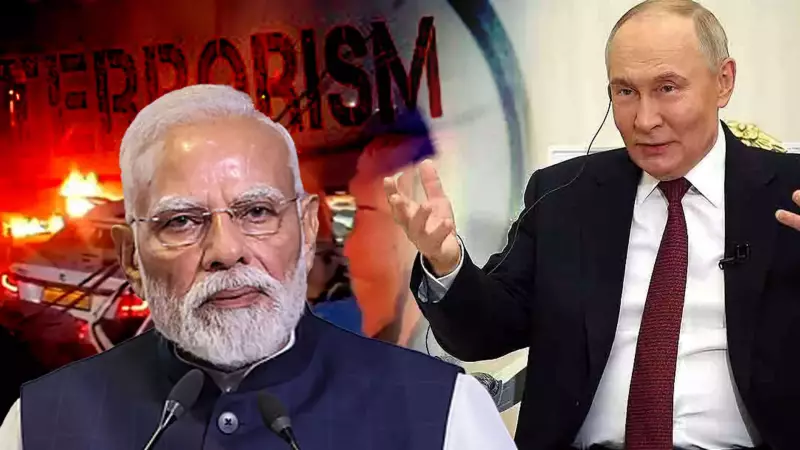
In a powerful diplomatic statement, Russian President Vladimir Putin has delivered a robust message of solidarity with India, firmly endorsing its stance against terrorism and acknowledging the nation's enhanced position on the world stage under Prime Minister Narendra Modi.
Putin's Unequivocal Support Against Terrorism
Reacting to the recent terror attacks in Pahalgam and Delhi, President Putin denounced what he described as global hypocrisy in dealing with violent extremism. He emphasized that nations should not treat terrorists differently based on convenience. Putin explicitly labeled India as a "full ally" and committed Russia's complete support in the fight to defeat terrorism in every form. He asserted that only lawful means can ever lead to genuine freedom, directly backing India's long-standing position on counterterrorism.
A Partnership Rooted in Trust and Strategic Ties
This public endorsement follows Russia's swift condemnation of the Pahalgam massacre. President Putin personally called Prime Minister Modi on December 5, 2025, to express his grief and solidarity with India. The Russian leader highlighted that the relationship between Moscow and New Delhi is built on a foundation of deep trust and strategic cooperation. He noted that this partnership remains steadfast, enduring global turbulence and external pressures from Western nations.

Crediting Modi for India's Rising Global Stature
A significant part of Putin's message focused on India's transformed international profile. He stated that the global community can no longer engage with India as it did in the past. Putin credited Prime Minister Narendra Modi's "unwavering leadership" as the primary force behind this significant shift. This recognition from a major global power like Russia underscores the perception of India's growing geopolitical weight and influence, shaped decisively by its current political leadership.
The strong message from the Kremlin reinforces the special and privileged strategic partnership between India and Russia. It signals that despite complex international dynamics, core alliances remain vital for both nations, particularly on issues of national security like terrorism.