In a significant revelation, Russian President Vladimir Putin has claimed credit for the now-famous car ride with Prime Minister Narendra Modi, describing it as his personal idea to symbolise friendship. The disclosure came during a candid interview just before his departure from Moscow to Delhi.
The Genesis of the Gesture
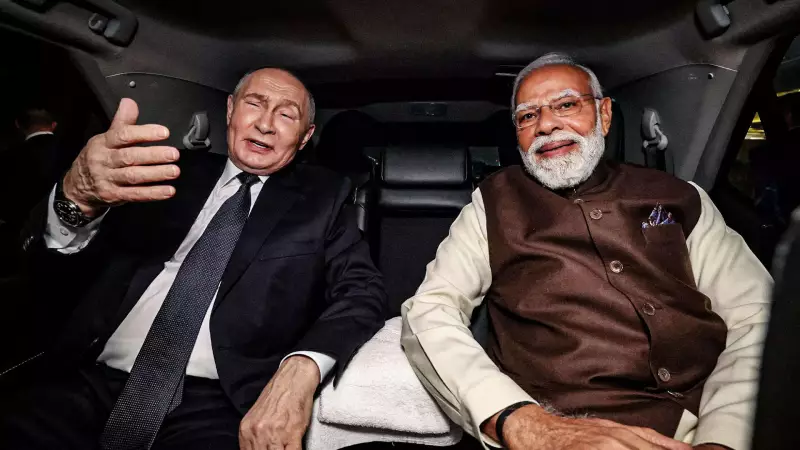
President Putin explained that the viral moment, which first occurred during the Tianjin SCO Summit, was entirely his initiative. He intended it as a powerful, non-verbal statement of the strong bond between the two nations. This symbolic act was recently reprised in Delhi, where PM Modi personally welcomed the Russian leader and joined him in the same vehicle, echoing their earlier drive in the Russian-made Aurus Senat limousine.
Putin emphasised that their extended conversation inside the car was a reflection of the comfort and mutual understanding shared by the two leaders. This sentiment was echoed by PM Modi in a post on social media platform X, where he described their discussions as highly insightful.

A Message Amidst Geopolitical Tensions
This public display of camaraderie arrives at a diplomatically sensitive juncture. India is currently navigating pressure from the United States, which has imposed tariffs targeting imports of Russian crude oil. Against this backdrop, the car ride transcends mere optics.
Analysts view it as sending a deeper geopolitical signal: that the India-Russia strategic relationship remains firmly anchored in personal trust between the leaders and historical continuity. It is interpreted as a quiet but firm stance amidst global volatility and external pressures.
Car Diplomacy: A Moving Symbol
The recurring image of the two leaders sharing a vehicle has evolved into a potent form of 'car diplomacy.' It has become a moving symbol of a partnership that continues to adapt and evolve. The gesture underscores that despite shifting global alliances and economic headwinds, the foundational trust in the bilateral relationship endures.
This episode highlights how personal rapport between world leaders can shape diplomatic narratives. The deliberate choice to repeat the gesture in India reinforces a message of reciprocity and enduring friendship, suggesting that the partnership is moving forward on a path defined by its own logic and shared history.