

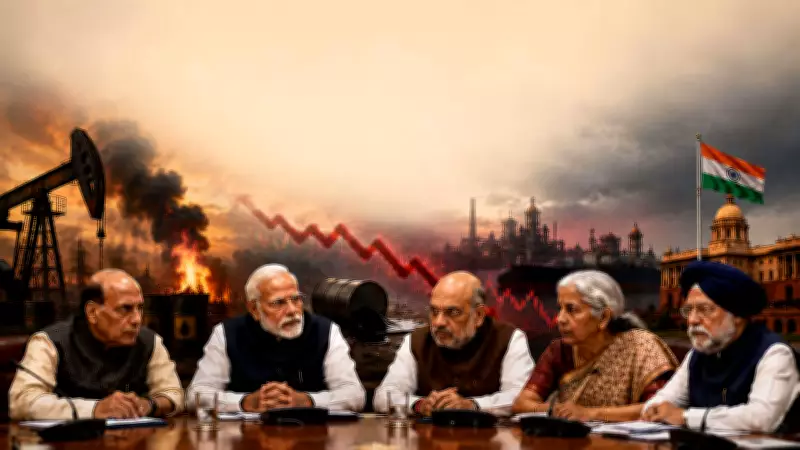
Prime Minister Narendra Modi has convened a crucial meeting of the Council of Ministers at Seva Teerth in Delhi, just hours after returning from his Europe tour. All Union ministers have been asked to remain in the national capital ahead of the high-level discussions, making the meeting politically significant.
West Asia Crisis Dominates Agenda
Sources indicate that the ongoing West Asia crisis and its possible economic impact on India are expected to dominate the agenda. The government is closely monitoring concerns linked to crude oil prices, fuel supply chains, and inflation amid escalating tensions in the region. A high-powered informal group of ministers led by Defence Minister Rajnath Singh is already reviewing the evolving situation. Home Minister Amit Shah, Finance Minister Nirmala Sitharaman, and Petroleum Minister Hardeep Singh Puri are part of the group overseeing preparedness measures.
Speculation Over Cabinet Reshuffle
The meeting has also intensified speculation around a possible Cabinet reshuffle and expansion in the Modi 3.0 government ahead of its first anniversary on June 10. Sources indicate that the BJP leadership is reviewing ministerial performance and organisational functioning before any major exercise. The developments have made today's meeting one of the most closely watched political and governance discussions in recent weeks.

The Prime Minister's return from Europe and the immediate convening of this meeting underscore the government's focus on both external challenges and internal adjustments. The West Asia crisis, with its potential to disrupt global energy markets, poses a significant risk to India's economic stability. The informal group of ministers, already in place, reflects the government's proactive approach to managing the situation.
Meanwhile, the possibility of a Cabinet reshuffle adds another layer of intrigue. The BJP's review of ministerial performance suggests that changes could be on the horizon, aimed at optimising governance ahead of the government's first anniversary. This meeting, therefore, serves a dual purpose: addressing immediate geopolitical concerns and setting the stage for potential administrative changes.
As the Council of Ministers gathers at Seva Teerth, all eyes are on the outcomes of these high-level discussions. The decisions taken here could have far-reaching implications for India's foreign policy, economic strategy, and domestic governance in the coming months.






