

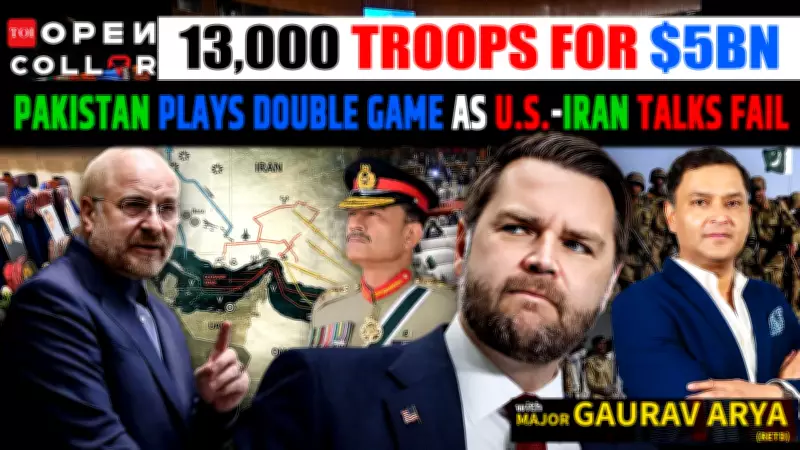
Pakistan's $5 Billion Military Gamble Exposed Amid Failed US-Iran Talks
In a revealing analysis on OPEN COLLAR, Major Gaurav Arya has exposed Pakistan's controversial dual strategy during the recent high-stakes negotiations between the United States and Iran. The talks, hosted in Islamabad, ultimately collapsed, raising serious questions about Pakistan's role and intentions on the international stage.
The Diplomatic Facade and Military Reality
While Pakistan presented itself as a neutral mediator facilitating crucial dialogue between Washington and Tehran, evidence suggests a far more complex and calculated approach was simultaneously underway. During the very period these diplomatic efforts were taking place, Islamabad made a significant military move that has drawn global scrutiny.
Pakistan deployed approximately 13,000 troops along with advanced F-16 fighter jets to Saudi Arabia, a key regional player with longstanding tensions toward Iran. This substantial military mobilization, valued at an estimated $5 billion, occurred concurrently with the peace negotiations, creating a stark contrast between Pakistan's diplomatic posture and its military actions.

Questioning Islamabad's True Intentions
The timing and scale of this deployment have led analysts to question whether Pakistan was genuinely committed to facilitating peace or pursuing a more financially-driven agenda. Major Arya's investigation suggests this may represent a calculated double game, where diplomatic hosting served as cover for strategic military partnerships that bring substantial financial returns.
This revelation comes amid growing concerns about Pakistan's economic challenges and potential desperation for foreign currency inflows. The $5 billion military deal with Saudi Arabia represents a significant financial injection at a time when Pakistan faces mounting debt and balance of payment pressures.
The Broader Regional Implications
The collapse of the US-Iran talks, combined with Pakistan's simultaneous military deployment, has created new uncertainties in an already volatile region. Several critical questions now demand answers:
- Was Pakistan's mediation effort genuine or primarily a diplomatic cover?
- How does deploying troops to Saudi Arabia align with hosting Iran-US negotiations?
- To what extent did financial considerations drive Pakistan's dual-track approach?
- What impact will this exposure have on Pakistan's credibility as a future mediator?
The OPEN COLLAR analysis suggests that Pakistan's actions may have undermined the very diplomatic process it was supposedly facilitating. By strengthening military ties with Iran's regional rival during sensitive negotiations, Islamabad potentially compromised its position as an honest broker.
Looking Forward: Consequences and Credibility
This exposure of Pakistan's $5 billion military gamble during failed peace talks represents more than just a diplomatic embarrassment. It raises fundamental questions about how nations balance economic imperatives with diplomatic responsibilities, and whether financial desperation can compromise international peace efforts.
The revelation also highlights the complex interplay between diplomacy, military strategy, and economic necessity in contemporary international relations. As Major Arya's analysis concludes, the world is now watching to see how Pakistan responds to these serious allegations and what consequences may follow for its role in future regional diplomacy.






