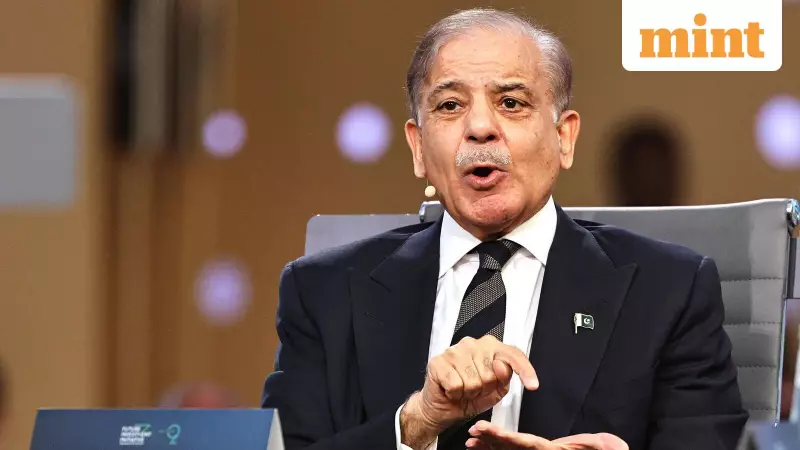
Pakistan is facing a significant political and constitutional crisis as its parliament prepares to vote on the controversial 27th Constitutional Amendment. The proposed changes have drawn fierce criticism from opposition parties, who warn the amendments will undermine the foundations of Pakistan's Constitution and drastically reduce the authority of the Supreme Court.
Nationwide Protests Announced Against Constitutional Changes
The multi-party opposition alliance, Tehreek-e-Tahafuz Ayeen-e-Pakistan (TTAP), has announced it will launch nationwide protests starting Sunday in response to the government's move. Majlis Wahdat-e-Muslimeen chief Allama Raja Nasir Abbas declared that democratic institutions are being paralysed and called for the nation to stand against the proposed amendment.
PkMAP Chief Mahmood Khan Achakzai confirmed the protest movement, stating their slogans would include "Long live democracy" and "down with dictatorship." The alliance, which includes jailed former prime minister Imran Khan's Pakistan Tehreek-e-Insaf, the Pashtunkhwa Milli Awami Party, Balochistan National Party-Mengal, and Sunni Ittehad Council, claims the government's actions are shaking the constitutional foundations.

Key Changes in the 27th Amendment
Law Minister Azam Nazir Tarar introduced the constitutional amendment in the Senate on Saturday, after which Chairman Yusuf Raza Gilani referred it to a house committee for deliberation. Committee Chairman Farooq Naek stated the panel would work to finalise the proposal through consensus building before Monday's expected vote.
The amendment proposes several fundamental changes to Pakistan's constitutional structure:
- Eliminating the Chairman Joint Chiefs of Staff Committee (CJCSC) post and replacing it with "Chief of Defence Forces"
- Establishing a Federal Constitutional Court with significant powers
- Revising the appointment process for high court judges
- Transferring certain Supreme Court authorities to the proposed Constitutional Court
- Granting the president lifelong immunity from criminal prosecution
Legal Experts Divided on Constitutional Impact
The legal community remains sharply divided over the amendment's implications. Many experts believe the changes would effectively dethrone the Supreme Court as Pakistan's highest judicial forum, transferring that position to the proposed Federal Constitutional Court.
One senior counsel warned that the Supreme Court could become a "Supreme District Court" with limited jurisdiction over ordinary civil and criminal appeals. The government could potentially amend laws like the Elections Act 2017 to route appeals to the Federal Constitutional Court instead.
Former additional attorney general Tariq Mehmood Khokhar expressed concern that the amendments would tighten executive control over the judiciary through expanded powers to transfer high court judges. He also noted the changes would formally vest the office of Chief of Defence Forces in the Chief of Army Staff and constitutionally guarantee the Field Marshal rank for life.
However, senior counsel Hafiz Ahsaan Ahmad Khokhar welcomed the initiative, calling it "a major and long-awaited structural shift" that could modernize the judiciary. He argued that creating separate apex courts for constitutional and appellate functions would provide greater clarity, efficiency and constitutional coherence.
Political Process and Next Steps
The government appears confident about securing the necessary two-thirds majority of at least 64 senators when voting occurs on Monday. Following Senate approval, the amendment must pass the National Assembly with another two-thirds majority before receiving presidential approval to become law.
The proposed Federal Constitutional Court would feature a chief justice who retires at 68, compared to the current retirement age of 65 for Supreme Court judges. Under the amended Article 175A, the chief justice of the Federal Constitutional Court is listed before the chief justice of the Supreme Court, indicating its superior position in the judicial hierarchy.

As Pakistan approaches this constitutional crossroads, the nation braces for potential political turmoil with opposition parties mobilizing for sustained protests against what they perceive as a fundamental alteration of the country's constitutional framework.