Pakistan's Contradictory Positions Hinder 1986 Negotiations with India
Forty years ago, on January 20, 1986, diplomatic discussions between India and Pakistan reached an impasse. The two nations could not bridge their differences while working on a single comprehensive draft agreement. Pakistan firmly maintained its reservations on two critical issues. These issues involved military bases and the acceptance of bilateralism for settling disputes.
A Revised Draft with Ambiguous Formulations
On the second day of the talks, Pakistan introduced a revised draft. This new document offered fresh formulations concerning the contentious points. Pakistan proposed that the comprehensive treaty should include a specific provision. This provision would state that both countries must not permit their territories to be used by others against each other.
However, Pakistan showed reluctance to make a firm commitment. It was not prepared to guarantee that it would never allow a foreign military base to be established by a third country. This stance created a significant obstacle in the negotiations.

Prime Minister Rajiv Gandhi on Chandigarh Transfer
Prime Minister Rajiv Gandhi addressed another pressing matter during this period. He expressed his view on the transfer of Chandigarh to Punjab. Gandhi stated he saw no reason why Chandigarh should not be handed over to Punjab on January 26. This date was stipulated in the Punjab accord.
When questioned about central government intervention in the dispute between Punjab and Haryana over Chandigarh's transfer, Gandhi responded cautiously. He said, "Let us wait for the Mathew Commission report." This indicated a reliance on the commission's findings before taking further action.
Other Notable Events from January 20, 1986
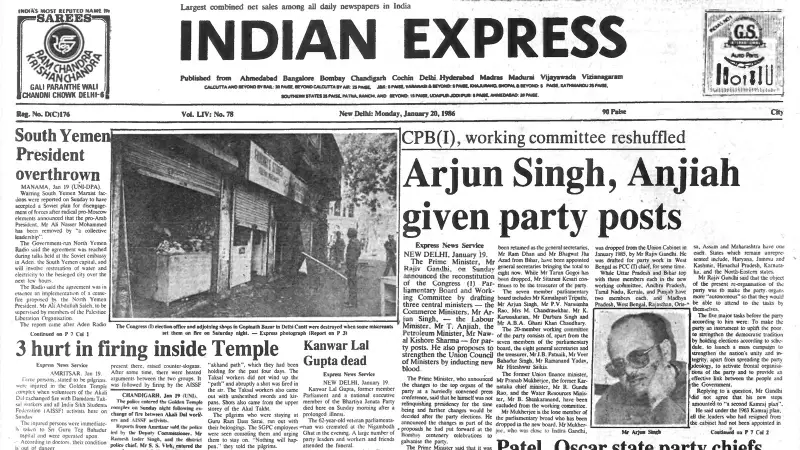
Several other important events occurred on this date. Kanwar Lal Gupta, a former Member of Parliament and national executive member of the Bharatiya Janata Party, passed away in New Delhi. He was sixty-two years old and had been suffering from a prolonged illness. His cremation took place at Nigambodh Ghat.
In international news, South Yemen experienced political upheaval. Warring Marxist factions in South Yemen reportedly accepted a Soviet plan for disengagement of forces. This development followed an announcement by radical pro-Moscow elements. They declared that the pro-Arab President, Ali Nasir Mohammed, had been removed from power.
North Yemen Radio, which was government-run, provided additional details. It reported that an agreement was reached during talks held in Aden. This agreement involved the restoration of water and electricity to the besieged city.