Pakistan Endorses Trump's Gaza 'Board of Peace' at Davos, Marking Strategic Shift
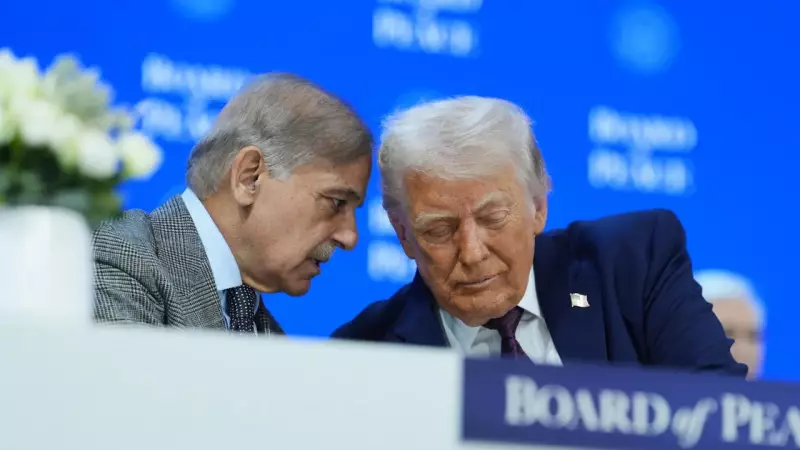
In a significant diplomatic move, Pakistan has formally backed US President Donald Trump's Gaza "Board of Peace" initiative, unveiled at the World Economic Forum in Davos. Prime Minister Shehbaz Sharif was present on stage as the plan was launched, signaling Islamabad's alignment with a US-led framework for Gaza's post-war future. This development places Pakistan among a select group of nations supporting the initiative, even as questions persist about whether political support will translate into practical, on-ground implementation.
Contrast with India and European Powers
Pakistan's participation stands in stark contrast to India's decision to stay off the stage despite receiving an invitation. European powers have largely opted out of the US-led initiative, expressing concerns about the board's structure and mandate. This divergence highlights Pakistan's strategic positioning within emerging global frameworks, while India maintains a more cautious approach to the Gaza issue.
Understanding the 'Board of Peace' Initiative
Trump's Board of Peace for Gaza, which notably does not include Palestine, is designed as a mechanism to oversee phase two of his 20-point Gaza roadmap. This comprehensive plan covers governance, reconstruction, investment, funding mobilization, and regional coordination. At its core lies the International Stabilisation Force (ISF), mandated to oversee demilitarization, humanitarian aid delivery, and ground-level security. This raises the prospect of member states being drawn into operational roles inside Gaza, potentially including troop deployments.

Composition of the Board
The board includes Pakistan alongside several key nations:
- Saudi Arabia
- Qatar
- Turkey
- Jordan
- United Arab Emirates
- Bahrain
- Morocco
Additionally, countries from Central Asia, Eastern Europe, and Latin America have joined. Approximately 35 nations have been confirmed from the 50-60 invitations sent, with Western European nations notably absent due to structural and mandate concerns.
Pakistan's Official Position
Pakistan confirmed that Prime Minister Shehbaz Sharif received a formal invitation from Trump to join the Board of Peace and attended the Davos launch. Foreign office spokesperson Tahir Andrabi stated, "Pakistan will remain engaged with international efforts for peace and security in Gaza, leading to a lasting solution to the Palestine issue in accordance with United Nations resolutions." However, this endorsement comes with unresolved questions about implementation details and long-term commitments.
UN Security Council Context
In October, the United Nations Security Council adopted a US-authored resolution paving the way for a transitional administration in Gaza and the creation of the ISF. Pakistan, which was presiding over the council at the time, voted in favor. Yet Islamabad also expressed reservations. Pakistan's UN ambassador Asim Iftikhar Ahmed noted that the resolution failed to clarify Gaza's governance structure, the Board of Peace's role, the ISF's mandate, or the extent of UN authority. "Those are all crucial aspects with a bearing on the success of this endeavor. We earnestly hope that further details in coming weeks will provide the much-needed clarity on these issues," he told Al Jazeera.
Pakistan's Strategic Calculations
Pakistan's endorsement of Trump's Gaza roadmap last year positioned it among countries most closely aligned with the US approach. With the largest army among Muslim-majority states backing the initiative, Pakistan is widely seen as a potential contributor to the ISF. Islamabad's geopolitical value has risen recently through intensified diplomacy with Middle Eastern partners and Washington. Key developments include:

- A strategic defense agreement with Saudi Arabia
- Expanded military engagement with Jordan and Egypt
- Unusually close ties between Army Chief Field Marshal Asim Munir and Trump
These moves represent a broader effort to repair years of strained US-Pakistan relations. In June, Trump hosted Munir for a private White House lunch—an unprecedented meeting marking the first time a US president engaged Pakistan's army chief alone without civilian leadership present.
Domestic Political Challenges
Any prospect of Pakistani boots on the ground in Gaza carries serious political risks domestically. Palestine remains a deeply emotive issue in Pakistan, which does not recognize Israel and explicitly bars travel to it on Pakistani passports. Even indirect coordination with Israeli forces would be politically sensitive and could provoke backlash against both the civilian government and military.
Deployment of Pakistani troops under a US-backed plan could reignite protests by Islamist parties fiercely opposed to the US and Israel. These groups have demonstrated capacity to mobilize thousands of supporters onto the streets. Politically, Pakistan Tehreek-e-Insaf (PTI), led by jailed former prime minister Imran Khan, rejected the government's decision to join the Board of Peace, demanding "full transparency and inclusive consultation." The party urged withdrawal of formal participation until complete parliamentary scrutiny and public consultation occurs.
Economic Considerations
Economic concerns further complicate Pakistan's involvement. According to Bloomberg reports citing a draft charter, Trump wants participating nations to pay $1 billion to retain seats on the Board of Peace—characterized by some as an alternative to the United Nations. The draft specifies that member states serving terms up to three years could secure renewal through substantial financial contributions.
This requirement becomes particularly significant given Pakistan's economic challenges:
- Years of weak growth and high inflation
- Chronic balance-of-payments stress
- Rising external debt dependence on IMF bailouts
- Deepening financial ties with China
- Domestic political instability undermining reform
For now, Pakistan's economy survives through IMF support, administrative controls, and geopolitical backstopping rather than durable growth.
Regional Security Complexities
Pakistan faces persistent security challenges on its eastern and western borders, complicating any overseas deployment. Ongoing issues with Afghanistan include recent military confrontations—the most serious since the Taliban's 2021 takeover of Kabul. Deadly clashes triggered Pakistani airstrikes, Afghan retaliatory fire, and temporary closure of key border crossings vital for trade and transit. While Pakistan and Afghanistan agreed in November to uphold a ceasefire during peace talks in Istanbul, tensions remain unresolved.
Expert Analysis and Future Implications
Michael Kugelman, Senior Fellow for South Asia at the Washington-based Atlantic Council, notes that "not contributing to the Gaza stabilisation force could annoy Trump, which is no small matter for a Pakistani state that appears quite keen to remain in his good graces—in great part to secure US investment and security aid." This highlights Pakistan's delicate balancing act between international expectations and domestic constraints.
Foreign Minister Ishaq Dar stated in November that Pakistan could consider contributing troops for peacekeeping but clarified that disarming Hamas was not Islamabad's responsibility. Whether political endorsement translates into stabilisation forces on the ground, and whether Pakistan can absorb the domestic and strategic costs of such involvement, remains the unanswered question hanging over Islamabad's Gaza calculus.
Conclusion: A Complicated Diplomatic Maneuver
By backing Trump's Board of Peace, Pakistan has positioned itself inside a US-led framework shaping Gaza's post-war future. The move enhances its regional relevance and reinforces ties with Washington and Gulf partners. However, this strategic alignment comes with substantial risks—domestic political backlash, economic constraints, and regional security complications. As Pakistan navigates these complex dynamics, its Gaza policy will continue to reflect broader geopolitical calculations and internal pressures, making this endorsement both an opportunity and a challenge for Islamabad's foreign policy establishment.