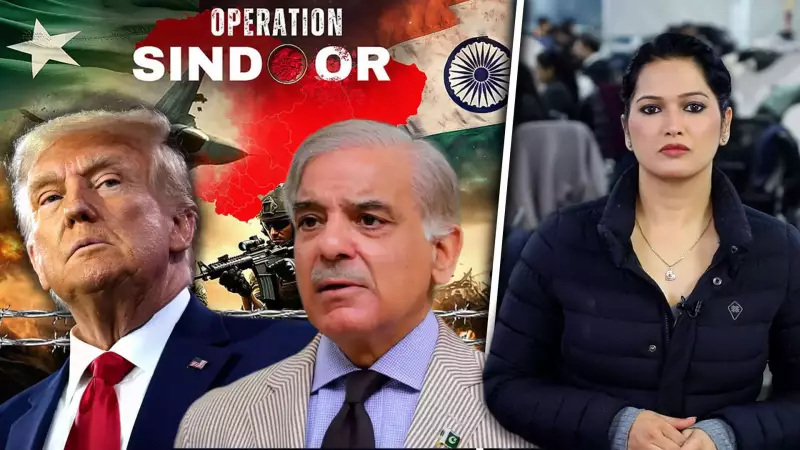
Newly disclosed filings under the United States Foreign Agents Registration Act (FARA) have laid bare a frantic diplomatic campaign by Pakistan. The aim was to persuade Washington to intervene and halt India's decisive military response, known as Operation Sindoor, which was launched in the wake of the Pahalgam terror attack.
The Panicked Outreach to Washington
The documents reveal the scale and intensity of Islamabad's efforts as India conducted precision strikes on terror camps and their support infrastructure. Pakistan's representatives made over sixty separate contacts with senior officials in the US government and influential figures in the American media. This multi-pronged lobbying blitz occurred in January 2026, as India's sustained military action sent shockwaves through Pakistan's power corridors.
Discussions during these contacts covered a wide range of topics designed to sway American opinion and policy. Key points included the situation in Kashmir, broader regional security concerns, and most notably, attempts at narrative management regarding India's justified counter-terror operation. The filings clearly document a state seeking external intervention to counter a neighbor's firm defensive action on its own soil.

Satellite Proof Contradicts Public Denials
Pakistan's official stance following Operation Sindoor was one of public denial, claiming no significant damage or hits on terror infrastructure. However, this position was severely undermined by subsequent evidence. Satellite imagery analysis provided clear, visual proof that contradicted Islamabad's claims. The imagery showed the tangible effects of India's precision strikes, lending irrefutable credibility to New Delhi's account of events and significantly strengthening India's diplomatic position globally.
The revelation of these lobbying attempts, coupled with the hard evidence from satellite photos, paints a picture of a nation caught off guard by India's resolve. It highlights the gap between Pakistan's public posturing and its private alarm, prompting it to urgently seek US assistance to curb Indian military action.
Broader Implications for Regional Diplomacy
This episode, as detailed in the FARA filings, underscores several critical points in contemporary geopolitics. First, it demonstrates India's unwavering commitment to a zero-tolerance policy against cross-border terrorism. Second, it exposes the methods through which Pakistan attempts to internationalize bilateral issues and seek third-party mediation when faced with decisive Indian action. Finally, it shows the importance of technological and intelligence superiority, like satellite surveillance, in validating claims and winning the narrative war on the international stage.
The fallout from Operation Sindoor and the exposed lobbying campaign continues to resonate. It serves as a stark reminder of the ongoing security challenges and the complex diplomatic maneuvers that define the relationship between the two nuclear-armed neighbors, with Washington often serving as a focal point for such efforts.