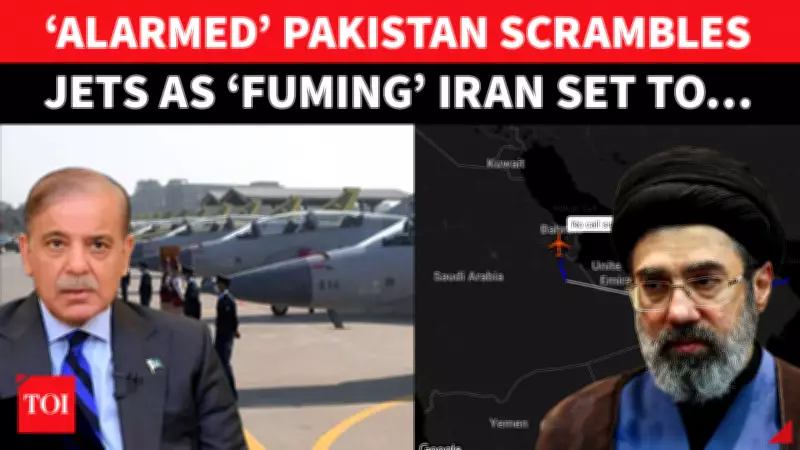
Pakistan Launches Massive Air Defense Operation for US-Iran Talks
In an extraordinary peacetime security measure, Pakistan has scrambled a comprehensive air defense fleet to safeguard the arrival of the Iranian delegation for crucial diplomatic talks with the United States in Islamabad. The operation, which commenced on April 10, 2026, involves a formidable array of military assets, including advanced fighter jets, aerial refueling tankers, Airborne Warning and Control System (AWACS) aircraft, and various support planes.
Unprecedented Security Measures for High-Stakes Diplomacy
Dubbed "Iron Escort" by military officials, this mission represents one of the most significant air defense deployments in Pakistan's recent history outside of active conflict. The primary objective is to create an impenetrable security corridor, preventing any potential disruptions or external threats that could jeopardize the sensitive negotiations. Islamabad itself has been placed under an extensive security lockdown, with heightened surveillance and restricted movement throughout the capital.
The timing of these talks coincides with escalating diplomatic friction between Pakistan and Israel, adding another layer of complexity to an already tense regional situation. Pakistani authorities have expressed particular concern about potential interference from external actors, though they have not specified any particular nation as the source of these concerns.

Iran's Weakened Air Capabilities Elevate Pakistan's Role
With Iran's air force capabilities significantly diminished following recent regional conflicts, Pakistan's protective role has become absolutely critical to ensuring the safe passage and security of the Iranian delegation. This military escort operation underscores Pakistan's emerging position as a key security guarantor in delicate diplomatic processes within the volatile Middle East region.
Global attention is firmly fixed on Islamabad as international observers question whether these carefully protected talks can successfully transform the current fragile ceasefire between the United States and Iran into a more durable, lasting peace agreement. The success or failure of these negotiations could have profound implications for regional stability and international relations throughout the Middle East and beyond.
Heightened Regional Tensions and International Scrutiny
The security operation occurs against a backdrop of multiple regional crises, including ongoing conflicts in Gaza and Lebanon, and strained relations between various Middle Eastern powers and Western nations. The substantial military deployment reflects the Pakistani government's determination to prevent any incident that could derail these potentially historic peace talks.
International diplomatic circles are closely monitoring the situation, recognizing that Pakistan's unprecedented security measures highlight both the significance of the US-Iran negotiations and the precarious nature of current Middle Eastern geopolitics. The outcome of these talks could potentially reshape alliances and conflict dynamics across the region for years to come.