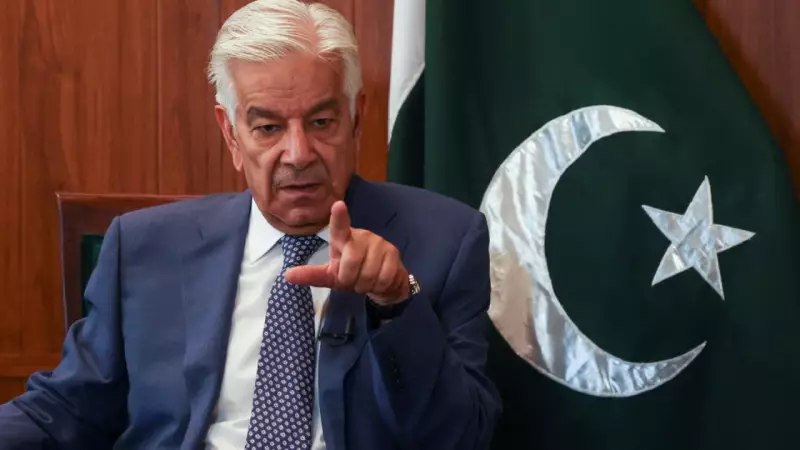
In a statement that has ignited a firestorm of controversy, Pakistan's Defence Minister Khawaja Asif made a startling appeal to the United States and Turkey on Thursday. He urged the two nations to "kidnap" Israeli Prime Minister Benjamin Netanyahu if they believed in justice and humanity, citing the ongoing Israel-Gaza conflict.
Viral Interview and Explosive Remarks
During a televised interview, clips of which have now gone viral across social media platforms, Asif drew a direct parallel to Venezuela. He suggested the US should apprehend Netanyahu "just as Venezuelan President Nicolas Maduro was taken away." The minister did not stop there, adding that Turkey could also seize the Israeli leader and claimed that "Pakistanis are praying for it."
Launching a scathing verbal attack, Asif described Netanyahu as the "worst criminal of humanity." He asserted that no historical atrocities matched those being committed against Palestinians in Gaza. "No community has done what Israel has done to Palestinians in the last 4,000-5,000 years," he claimed. "He [Netanyahu] is the biggest criminal of humanity. The world has not seen a bigger criminal."

Anchor Intervenes as Remarks Escalate
The interview took a more contentious turn when Asif appeared to raise the issue of penalising enablers of such crimes. He began a sentence with, "And what does the law say about those who support such criminals…" before the show's anchor, Hamid Mir, swiftly interjected and called for a break.
Mir issued a clear warning on air, stating that Asif's remarks risked being interpreted as a veiled reference to US President Donald Trump. The anchor indicated that the defence minister would not be returning to the broadcast after the commercial break.
Geopolitical Context and Legal Precedent
This incident occurs against a complex geopolitical backdrop. Pakistan does not maintain formal diplomatic relations with Israel and has historically been a staunch supporter of the Palestinian cause. Furthermore, Islamabad nurtures close ties with Iran, another vocal regional critic of Israeli policies.
Adding a layer of legal context to the discussion, the International Criminal Court (ICC) has previously issued arrest warrants for Netanyahu in connection with alleged war crimes in Gaza. This development was referenced during the televised exchange, providing a basis for Asif's fiery rhetoric.
The defence minister's comments are likely to draw significant international scrutiny and debate, highlighting the deeply polarised global perspectives on the Gaza conflict. The call for the kidnapping of a sitting head of government by a senior minister is an extraordinary escalation in diplomatic discourse.