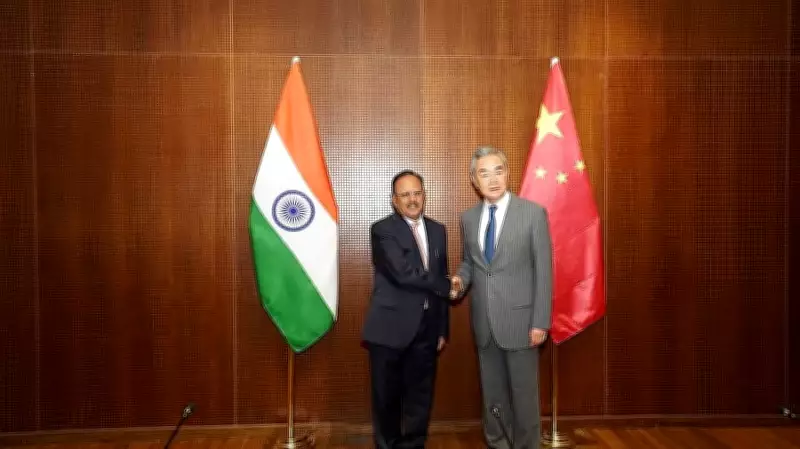
India's National Security Advisor Ajit Doval met with China's Foreign Minister Wang Yi for a bilateral discussion on the sidelines of a BRICS meeting held in New Delhi. The meeting comes as both nations prepare for the 25th round of India-China boundary talks, signaling continued diplomatic engagement despite ongoing border tensions.
Meeting Details and Context
The two officials met in the Indian capital, leveraging the BRICS platform to hold separate talks focused on bilateral issues. According to sources familiar with the matter, the discussions covered a range of topics including the current state of border management and the roadmap for the upcoming boundary dialogue. The 25th round of talks is expected to address unresolved issues along the Line of Actual Control (LAC) in eastern Ladakh.
This meeting marks one of the highest-level interactions between the two countries in recent months. Wang Yi's visit to New Delhi for the BRICS foreign ministers' meeting provided a convenient opportunity for the bilateral engagement. The BRICS grouping, comprising Brazil, Russia, India, China, and South Africa, has often served as a platform for sideline diplomacy among member states.

Significance for India-China Relations
The Doval-Wang meeting underscores the ongoing efforts to stabilize relations after the 2020 Galwan Valley clash and subsequent military standoffs. Both sides have maintained diplomatic and military channels to manage tensions, with multiple rounds of talks held at various levels. The 25th round of boundary talks is expected to build on previous agreements, including the disengagement process in certain friction points.
Experts note that such high-level meetings are crucial for maintaining communication and preventing escalation. The meeting also signals a willingness from both sides to keep dialogue open, even as differences persist over border demarcation and other strategic issues.
Impact and Next Steps
The bilateral meeting is likely to set the tone for the upcoming boundary talks, which aim to achieve further de-escalation and confidence-building measures. While no immediate breakthroughs were announced, the fact that both sides continue to meet indicates a mutual interest in managing the relationship prudently.
The BRICS meeting itself provided a broader diplomatic context, with discussions on multilateral cooperation, global governance, and economic issues. However, the India-China bilateral meeting drew particular attention due to its implications for regional stability in Asia.