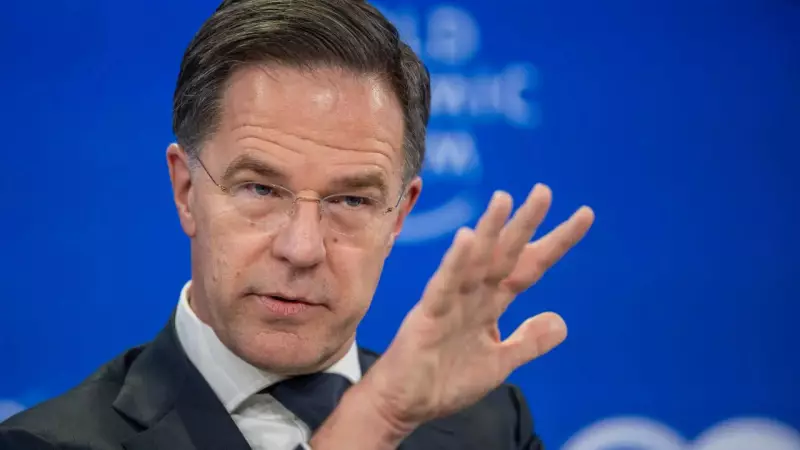
NATO Secretary General Mark Rutte has announced that forthcoming discussions between the United States and Greenland will concentrate on a crucial strategic objective: preventing Russia and China from obtaining military or economic footholds in the Danish Arctic territory. Rutte made these significant remarks on Thursday, outlining the alliance's priorities for securing the increasingly contested polar region.
Constructive Davos Dialogue Sets the Stage
Rutte's comments followed a day after his meeting with US President Donald Trump at the World Economic Forum in Davos. This diplomatic engagement appears to have eased earlier tensions, as President Trump moderated previous aggressive statements about potentially seizing Greenland by force. Instead, Trump indicated that a foundational "framework" for an agreement concerning the island had been established between the parties.
"It was a very good discussion," Rutte was quoted as saying by the AFP news agency during an event on Ukraine held alongside the Davos forum. He emphasized that future negotiations would build directly upon the progress made in his conversation with President Trump.

Multilateral Arctic Security Strategy
The NATO chief clarified that these upcoming talks would involve coordinated efforts among NATO allies, with particular focus on the alliance's seven Arctic member nations. The collective goal is to ensure the region remains stable and secure amidst growing geopolitical competition.
One paramount objective, according to Rutte, is to guarantee that "the Russians and the Chinese stay out" of the Arctic sphere of influence. He elaborated that another critical priority would be specifically blocking China and Russia from accessing Greenland's economy or establishing any form of military presence on the territory.
Recent Diplomatic Engagements in Washington
This development comes on the heels of high-level talks held last week in Washington, where the foreign ministers of Denmark and Greenland met with US Vice President JD Vance and Secretary of State Marco Rubio. These discussions likely laid important groundwork for the strategic direction now being articulated by NATO leadership.
Repairing Transatlantic Relations
President Trump's earlier controversial remarks about Greenland, which is an autonomous territory within NATO member Denmark, had created significant strain in transatlantic relations. The comments triggered what many analysts described as the most serious diplomatic rift between Europe and Washington in decades.
The shift toward a negotiated "framework" and the focus on shared security concerns regarding Russia and China represents a notable recalibration in approach. It suggests a move away from unilateral assertions toward more collaborative, alliance-based strategies for addressing Arctic security challenges.
As climate change opens new Arctic shipping routes and reveals untapped resources, the geopolitical significance of Greenland continues to grow. The upcoming US-Greenland negotiations, as framed by NATO's leadership, will therefore play a pivotal role in shaping the balance of power in this strategically vital region for years to come.