NATO Alliance Faces Severe Test Over Greenland Dispute as Trump Pushes for Control
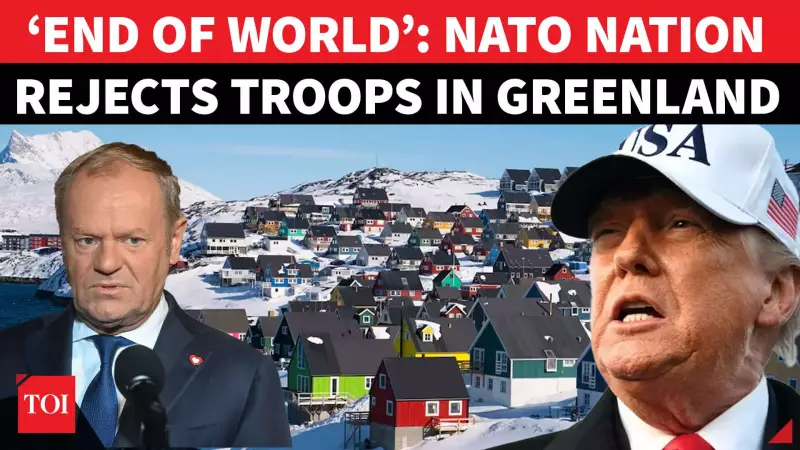
Polish Prime Minister Donald Tusk has issued a stark warning that could shake the foundations of the NATO military alliance. Tusk declared that any attempt by one NATO country to annex another would signal "the end of the world as we know it." This dramatic statement comes amid escalating tensions over Greenland, a territory that has become a flashpoint in international relations.
Trump Insists on Greenland's Strategic Importance
U.S. President Donald Trump maintains a firm stance on Greenland. He argues the island is vital to American national security. Trump has refused to rule out any options regarding Greenland's future. He warns that if the United States does not act, Russia or China might move in to establish a presence there.
This position puts the U.S. at odds with other NATO members and directly challenges the sovereignty of Denmark, which administers Greenland.

European Allies Respond with Military Exercises
As the political rhetoric intensifies, several European NATO members are taking concrete military steps. France, Germany, the United Kingdom, and Nordic allies have deployed forces to the Arctic region. They are conducting joint exercises, a clear signal of their commitment to the area's security.
However, Poland has adopted a different approach. The Polish government has stated it will not send troops to Greenland. This decision highlights the growing divisions within the alliance over how to handle the Greenland situation.
Denmark and Greenland Reject Claims, Call for Calm
The governments of Denmark and Greenland have responded firmly to the allegations. They reject claims of any Chinese military presence on the island. Both administrations are calling for dialogue and de-escalation to resolve the growing crisis peacefully.
Their appeal for calm stands in contrast to the increasingly militarized posture emerging from other capitals. The situation presents a complex challenge for NATO, testing its unity and strategic coherence.
A Critical Moment for Transatlantic Relations
The Greenland dispute is more than a territorial issue. It represents a fundamental test for the NATO alliance in the 21st century. Key questions are now on the table:
- Can NATO maintain unity when a major member pursues a controversial strategic goal?
- How will European allies balance their defense commitments with diplomatic pressures?
- What is the future of Arctic security in an era of renewed great power competition?
Prime Minister Tusk's warning underscores the high stakes. His words suggest that actions over Greenland could redefine the alliance itself. As military deployments continue and diplomatic tensions rise, the world watches to see if NATO can navigate this crisis without fracturing.