NASA Confronts Major Budget Reduction Amid Unwavering Lunar Ambitions
A stark paradox has emerged at the heart of American space policy. NASA, the world's premier space agency, is being tasked with achieving more ambitious goals with significantly fewer financial resources. A proposed United States federal budget for the fiscal year 2027 seeks to cut nearly a quarter of NASA's funding, even as its core objectives to return astronauts to the Moon, construct a permanent lunar base, and push deeper into the solar system remain firmly in place.
The Financial Contradiction: Deep Cuts vs. Lofty Goals
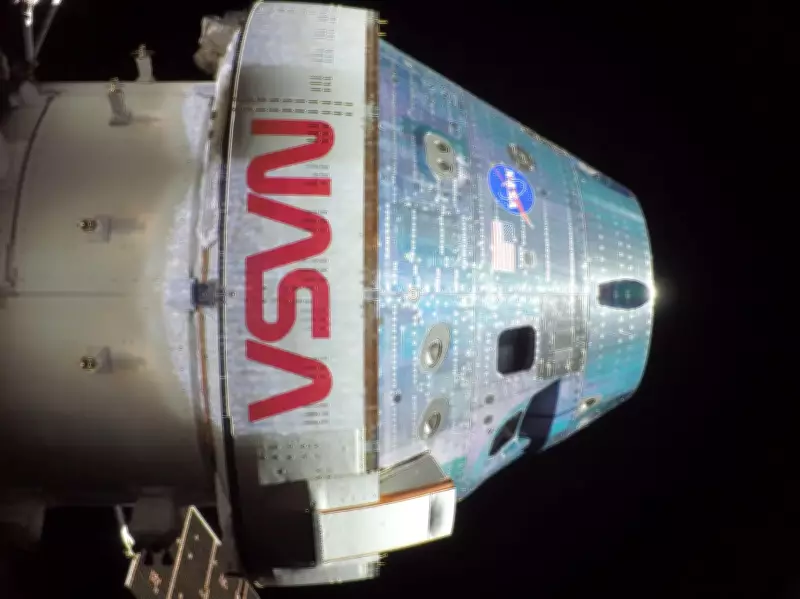
The proposed budget outlines a reduction of approximately 23% to 25% in NASA's overall funding, which would bring the agency's allocation down to around $18.8 billion. This substantial decrease arrives simultaneously with intense pressure to accelerate the flagship Artemis program. This initiative is NASA's cornerstone project, aiming to land the first woman and the next man on the lunar surface and establish a sustained, long-term human presence there.
This situation transcends a simple budgetary narrative. It forces a fundamental question about national priorities: What should be the primary mission of NASA in the 21st century? The tension pits the drive for human exploration and geopolitical prestige against the pursuit of pure scientific discovery and institutional stability.

Driving Forces Behind the Proposed Cuts
The proposed reductions are part of a broader governmental push for fiscal restraint and operational efficiency across numerous US agencies. NASA Administrator Jared Isaacman has publicly endorsed the proposal, contending that the agency's primary challenge is not a lack of funding but rather an issue with execution and delivery.
The administration's rationale hinges on the belief that NASA already possesses substantial resources from previous appropriations and supplemental funding packages. The new strategic focus, officials argue, should be on delivering concrete results and visible milestones rather than seeking increased annual spending. This approach effectively prioritizes high-profile mission outcomes over the expansion of the agency's institutional footprint or program portfolio.
An Uneven Distribution of Reductions
The budget cuts are not applied uniformly across NASA's diverse divisions. They are sharply concentrated in specific, critical areas, creating a significant internal imbalance.
- Science Directorate: NASA's science budget is poised to absorb the most severe impact, with nearly half of its funding potentially at risk. This threatens planetary science, astrophysics, heliophysics, and Earth science missions.
- Space Technology: Programmes dedicated to developing next-generation space technologies also face deep cuts, estimated to be close to one-third of their current funding.
- Exploration Systems: In stark contrast, exploration programmes, particularly those directly tied to the Artemis mission architecture, are largely shielded from reductions and are even being prioritized for continued support.
This lopsided allocation means that while human spaceflight initiatives like Artemis continue to advance, numerous scientific missions—especially those in early development phases or extended operational stages—face cancellation, delay, or significant scaling back.
The High-Stakes Consequences for Science and Discovery
Historically, NASA has masterfully balanced its dual core functions: exploration and science. Exploration captures public imagination and demonstrates technological leadership, while science builds foundational knowledge, drives innovation, and establishes long-term capability.
The proposed budget decisively shifts this balance toward exploration at the expense of science. The consequences are profound and far-reaching. Fewer science missions translate directly into reduced data collection, slower progress in understanding our solar system and the universe, and a potential diminishment of American leadership in global space research. Over time, this strategic pivot could erode one of NASA's greatest historic strengths: its unparalleled ability to marry ambitious human exploration with groundbreaking robotic discovery.

In essence, NASA may reach the Moon faster under this plan, but it risks understanding far less about the cosmos when it arrives.
The Artemis Program: A Central Strategic Gamble
At the very center of this new strategy sits the Artemis program. The administration and its supporters believe that establishing a sustained lunar presence will act as a catalyst, unlocking new technological advancements and creating unforeseen scientific opportunities. They view Artemis as the essential proving ground and stepping stone for humanity's eventual journey to Mars.
Proponents argue that concentrated investment in Artemis will yield tangible, historic results like permanent lunar infrastructure and regular crewed missions. Critics, however, warn that this intense focus comes at an unacceptable cost—the gutting of a broader, more diverse scientific agenda that has defined NASA's legacy for decades.
A Shift in Posture and Global Context
Another notable change is evident in how this budget has been communicated. Unlike in previous years, there have been no major public briefings or high-profile media announcements from NASA's senior leadership. The messaging has been more restrained and internally focused, emphasizing mission execution over political discourse.
This reflects a subtle but significant shift in the agency's public posture—from an openly communicative, science-driven institution to a more tightly managed, results-oriented organization. Meanwhile, the global space landscape is evolving rapidly. China is aggressively pursuing its own lunar ambitions, private companies like SpaceX are revolutionizing spaceflight economics, and international partnerships are becoming more strategic. US funding decisions now directly influence how the nation positions itself in this new, multi-faceted space race.
The Bottom Line: A Fundamental Strategic Pivot
This proposal represents far more than a routine budget cut. It is a deliberate and consequential strategic pivot. NASA is being consciously reshaped into an agency that prioritizes visible, human-centric milestones over incremental robotic discovery, and operational efficiency over broad institutional capacity. The ultimate success or failure of this gamble hinges on a single, critical question: Can NASA deliver on its monumental exploration ambitions without fatally undermining the scientific foundation that has made it a global icon? For now, the agency is placing a colossal bet that returning humans to the Moon will justify all that it may be forced to leave behind in the vast, silent depths of space.