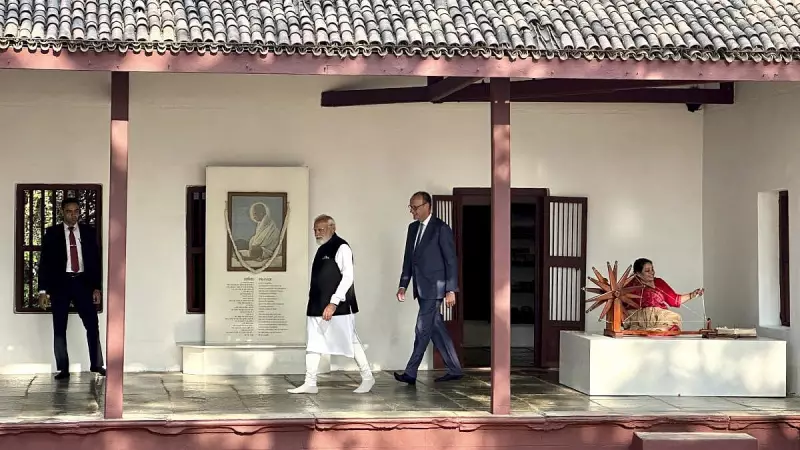
Prime Minister Narendra Modi and German Chancellor Friedrich Merz commenced a significant day in Ahmedabad with a solemn visit to the historic Sabarmati Ashram on 12 January 2026. The leaders paid their respects to Mahatma Gandhi, the Father of the Nation, at his former residence, which stands as a global symbol of peace and non-violence.
A Tribute to the Mahatma's Legacy
The visit to the Sabarmati Ashram was a poignant moment, highlighting the enduring relevance of Gandhi's principles. Both leaders spent time at the ashram, reflecting on the life and teachings of the man who led India's freedom struggle. This gesture underscored the universal appeal of Gandhi's philosophy, which continues to inspire global leaders and movements.
Inaugurating the International Kite Festival
Following the tribute, the focus shifted to celebration as Prime Minister Modi and Chancellor Merz proceeded to the Sabarmati Riverfront. There, they jointly inaugurated the much-anticipated International Kite Festival. The vibrant event, set against the backdrop of the rejuvenated riverfront, showcases Gujarat's rich cultural heritage and marks a key moment in the state's calendar of festivities. The festival attracts participants and spectators from across the world, turning the sky above Ahmedabad into a canvas of colour and creativity.

Symbolism and Bilateral Ties
The day's itinerary, blending reverence with festivity, carried deep symbolic weight. The visit to Gandhi's ashram by a prominent European leader like Friedrich Merz signifies the shared values between India and Germany. It also reflects India's role as a cultural and spiritual guide on the world stage. The subsequent inauguration of a public festival demonstrates the strengthening people-to-people and cultural connections between the two nations, building upon their established strategic and economic partnership.
The events of 12 January 2026 in Ahmedabad successfully wove together threads of history, diplomacy, and culture, presenting a multifaceted picture of modern India's engagements on the global scene.