PM Modi Flags Off India's First Vande Bharat Sleeper Train
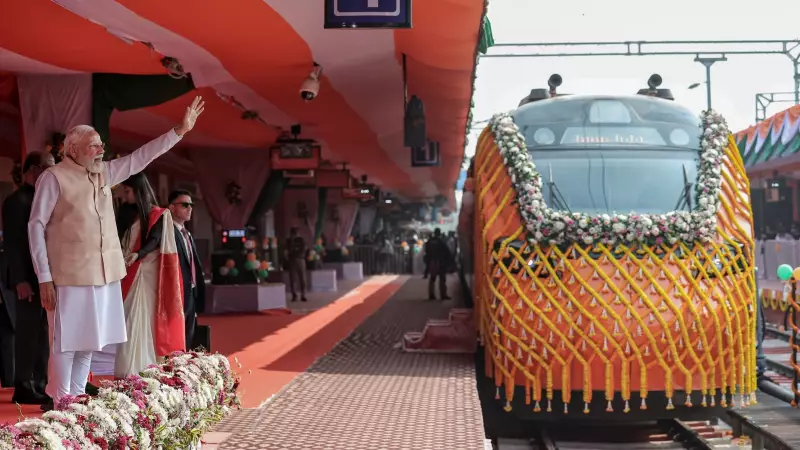
Prime Minister Narendra Modi officially launched India's inaugural Vande Bharat Sleeper train on Saturday. The train will operate between Howrah in West Bengal and Guwahati in Assam. This significant event took place at Malda Town railway station during the Prime Minister's two-day visit to West Bengal.
Major Infrastructure Projects Announced
During his visit, PM Modi announced railway and road projects totaling more than Rs 3,250 crore for West Bengal. He emphasized that these developments would particularly benefit the youth and boost regional business activities. "Today, we have begun the fast progress of Bengal from Malda," the Prime Minister declared.
Modi highlighted how Indian railways have transformed over the years. "There was a time when we looked at trains abroad and wished for similar ones in India. Today, those dreams are coming true," he stated. The Prime Minister noted that foreign tourists now photograph Indian trains and metros, sharing stories about railway development.

Features of the New Sleeper Train
The first Vande Bharat Sleeper train offers passengers an airline-like travel experience at economical fares. This fully air-conditioned train will reduce travel time by approximately 2.5 hours on the Howrah-Guwahati route. Key features include:
- Ergonomically designed berths for comfortable overnight journeys
- Ample luggage storage space
- Modern toilet facilities
- Accessibility features for divyangjan passengers
- Modular pantry systems
- Advanced disinfectant technology
- Indigenous Kavach safety system
- Enhanced fire safety measures
- CCTV surveillance throughout the train
The train is expected to boost religious tourism by connecting the land of Ma Kali with the land of Ma Kamakhya.
Railway Infrastructure Development
PM Modi laid foundation stones for four major railway projects in West Bengal:
- New rail line between Balurghat and Hili
- Next-generation freight maintenance facilities at New Jalpaiguri
- Upgradation of the Siliguri Loco Shed
- Modernisation of Vande Bharat train maintenance facilities in Jalpaiguri district
These projects will improve passenger and freight operations while enhancing logistics efficiency in North Bengal. They are also expected to generate substantial employment opportunities in the region.
The Prime Minister inaugurated electrification of rail lines between New Coochbehar-Bamanhat and New Coochbehar-Boxirhat. This electrification will enable faster, cleaner, and more energy-efficient train operations.
New Amrit Bharat Express Trains
Modi virtually flagged off four new Amrit Bharat Express trains:
- New Jalpaiguri-Nagercoil Amrit Bharat Express
- New Jalpaiguri-Tiruchirappalli Amrit Bharat Express
- Alipurduar-SMVT Bengaluru Amrit Bharat Express
- Alipurduar-Mumbai (Panvel) Amrit Bharat Express
These trains will provide affordable and reliable long-distance rail connectivity for students, migrant workers, and traders. They will strengthen inter-state economic and social linkages while connecting north Bengal with western and southern India.
"These trains will benefit tourists visiting Ganganagar, Dakshineswar, and Kalighat," PM Modi explained. "They will also serve those traveling to Maharashtra and southern states."
Additional Train Services and Road Projects
The Prime Minister flagged off two new train services equipped with LHB coaches:
- Radhikapur-SMVT Bengaluru Express
- Balurghat-SMVT Bengaluru Express
These services will offer safe and comfortable travel to major IT and employment hubs like Bengaluru.
PM Modi also laid the foundation stone for rehabilitation and four-laning of the Dhupguri-Falakata section of National Highway-31D. This key road project will improve regional connectivity and facilitate smoother movement of passengers and goods in North Bengal.
"Indian Railways is becoming independent and upgraded," the Prime Minister stated. "We are producing more locomotives than America and Europe, and exporting coaches that strengthen our economy and create employment. It is our mission to reduce distances."

These infrastructure projects are expected to play a vital role in building modern connectivity networks. They will strengthen eastern and north-eastern regions as key growth engines for India's development.