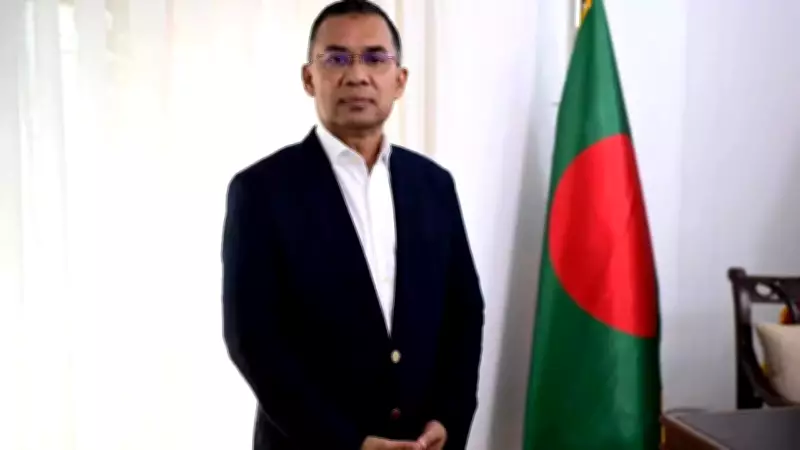
PM Modi Extends Early Congratulations to BNP's Tarique Rahman on Bangladesh Election Triumph
Prime Minister Narendra Modi was among the first global leaders to publicly congratulate Bangladesh Nationalist Party (BNP) chief Tarique Rahman for leading his party to what he termed a "decisive victory" in the recently concluded Bangladesh parliamentary elections. This gesture builds upon Modi's earlier diplomatic outreach to both Rahman and his recently deceased mother, former Prime Minister Khaleda Zia.
Endorsement of Electoral Process and Bilateral Commitments
Effectively endorsing the electoral process, for which India had notably declined to send observers, Prime Minister Modi stated on social media platform X that the victory clearly reflected the profound trust the Bangladeshi people have placed in Rahman's leadership. The Prime Minister further committed to working closely with Rahman to strengthen the multifaceted bilateral relations between India and Bangladesh and to collaboratively fulfill the aspirations of the Bangladeshi populace.
With the proscription of Sheikh Hasina's Awami League, a clear majority for the BNP was widely viewed as the optimal electoral outcome for India under the prevailing circumstances. However, the significant ascendance of the Jamaat-e-Islami party, which secured 68 seats—a dramatic increase from its previous historical tally not exceeding 18 seats—is anticipated to trigger fresh and serious security concerns within Indian strategic circles.

Direct Communication and Regional Diplomacy
Later in the day, even before the election results were officially declared, Prime Minister Modi engaged in a direct conversation with Tarique Rahman. During this exchange, Modi acknowledged Rahman's "remarkable" electoral success and expressed his support for Rahman's endeavor to realize the people's aspirations. "As two close neighbors bound by deep-rooted historical and cultural ties, I reaffirmed India's continued and unwavering commitment to the peace, progress, and prosperity of both our peoples," stated Prime Minister Modi.
In an earlier social media post, Modi emphasized that India will steadfastly continue to support a democratic, progressive, and inclusive Bangladesh. "I look forward to working with you to strengthen our multifaceted relations and advance our common development goals," added the Prime Minister. Modi is believed to be the second leader in the South Asian region to reach out to Rahman on platform X, following Pakistan's President Asif Ali Zardari. Notably, the United States was the first country to extend congratulations to Rahman, albeit at the ambassadorial level.
Pre-Election Outreach and Gestures
Ahead of the pivotal elections, India had conveyed to BNP leadership its fundamental interest in ensuring peace, stability, inclusion, and democracy in Bangladesh. New Delhi assured it would continue to engage with all stakeholders toward these objectives, even as it maintained its hosting of former Prime Minister Sheikh Hasina. Prime Minister Modi personally reinforced this diplomatic outreach by offering support for the medical treatment of Rahman's ailing mother and, following Khaleda Zia's demise, dispatching Foreign Minister S. Jaishankar to attend her funeral as a mark of respect.
Modi also sent a personal letter to Tarique Rahman, acknowledging the significant contributions of the three-time former Prime Minister Khaleda Zia to Bangladesh's national development and to the strengthening of bilateral ties with India. Rahman is understood to have responded positively to these gestures, maintaining that Bangladesh would work towards fostering a more "balanced" relationship with India.
Future Challenges and Bilateral Expectations
However, in pursuing this balanced approach, Rahman—as evident from the BNP's election manifesto—is unlikely to relent on several longstanding bilateral issues. These include concerns over border killings, the equitable sharing of transboundary river waters, and the pending demand for the extradition of Sheikh Hasina. Furthermore, as Bangladesh potentially reopens its doors to enhanced engagement with Pakistan, Rahman is also likely to advocate for an early revival of the stalled SAARC summit process.

For India, several core issues will remain non-negotiable with any government in Dhaka. These paramount concerns include the security of India's Northeastern states, the challenge of increasing radicalization, and the protection of minority communities, particularly Hindus. India will also expect the new Bangladeshi administration to remain mindful of India's security imperatives, especially as Dhaka recalibrates its foreign relations with countries like Pakistan and China. Both nations have been actively courting Bangladesh since the departure of the India-aligned Sheikh Hasina, who, while expanding Bangladesh's economic ties with Beijing, was careful not to compromise India's strategic interests.
Monitoring Democratic Reforms
India will also monitor closely the likely implementation of democratic reforms following the July Charter referendum, which accompanied the general election and was passed with over 60% of the vote. These proposed constitutional reforms include the introduction of an upper house in the Bangladeshi Parliament, the imposition of a two-term limit for the Prime Minister, and a renewed emphasis on a distinct Bangladeshi, as opposed to a broader Bengali, national identity.