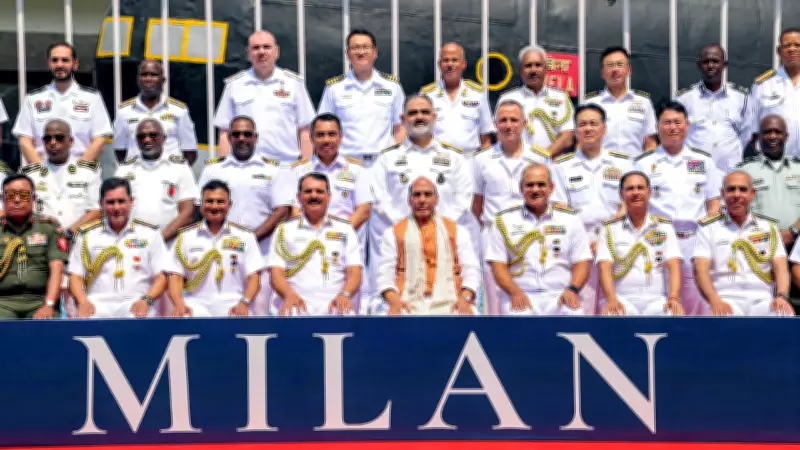
MILAN 2026: India's Strategic Naval Outreach for Global Maritime Order
MILAN 2026 is far more than a routine naval exercise; it represents India's ambitious strategic maritime outreach, dedicated to fostering a cooperative, secure, and rule-based global maritime order. Hosted by the Indian Navy in Visakhapatnam, this monumental event assembles naval chiefs, ships, aircraft, and professional delegations from an impressive 74 countries, marking it as one of the largest and most complex editions in its history. Beyond the sheer scale, the core mission is unequivocal: to bolster collective maritime security in an increasingly intricate and interconnected world.
A Response to Evolving Maritime Threats
The world's seas today confront a multitude of layered and transnational challenges. Traditional security threats persist alongside emerging risks such as piracy, maritime terrorism, illegal fishing, human trafficking, cyber vulnerabilities, and disruptions to critical supply chains. Competition over strategic waterways and underwater resources, including rare-earth minerals, has further escalated tensions. Additionally, climate change has intensified natural disasters, heightening the demand for humanitarian assistance and disaster relief operations.
MILAN 2026 is meticulously designed as a platform where navies collectively acknowledge that no single force, regardless of its capability, can address these challenges in isolation. Its mission is to promote cooperation, interoperability, and shared responsibility to safeguard the global maritime commons effectively.

Strengthening a Rules-Based Maritime Order
At the heart of MILAN 2026 lies a steadfast commitment to upholding international law, particularly the principles of the United Nations Convention on the Law of the Sea (UNCLOS). The exercise aims to reinforce freedom of navigation and peaceful dispute resolution, while encouraging the development of a comprehensive global naval architecture. This architecture seeks to enhance information sharing, secure communication links, and curb criminal activities on the high seas.
By fostering trust and facilitating professional exchanges, MILAN strives to contribute to an equitable maritime order rooted in mutual respect and adherence to international norms.
Advancing the MAHASAGAR Vision
MILAN 2026 aligns seamlessly with India's broader maritime doctrine of MAHASAGAR, which stands for Mutual and Holistic Advancement for Security and Growth Across Regions. Evolving from the earlier SAGAR vision (Security and Growth for All in the Region), MAHASAGAR reflects India's expanding commitment from regional seas to the wider oceans.
Through coordinated patrols, joint Exclusive Economic Zone surveillance, hydrographic assistance, and swift humanitarian responses, India positions itself as a dependable maritime partner. MILAN serves as the operational embodiment of this philosophy, emphasizing cooperation over competition and partnership over unilateralism.
Building Interoperability and Trust
Described as a "Maritime Mahakumbh" by Chief of the Naval Staff Dinesh K Tripathi, MILAN 2026 is structured in two distinct phases:
- Harbour Phase: This phase focuses on professional exchanges, seminars, subject-matter expert discussions, cross-deck visits, bilateral engagements, cultural interactions, and pre-sail planning conferences.
- Sea Phase: This phase features advanced maritime manoeuvres, coordinated security operations, tactical drills, and communication exercises aimed at enhancing operational synergy and collective readiness.
When ships sail together and sailors train together, they build a shared understanding that transcends geographical and political boundaries. This shared understanding is central to MILAN's overarching mission.
A Collective Commitment to Secure the Seas
With participation from 74 nations and accompanied by events such as the International Fleet Review, MILAN 2026 reflects global confidence in India as a trusted maritime partner. It underscores a simple yet powerful idea: while flags may differ, navies speak a common maritime language, one rooted in safety, stability, and shared prosperity.

Ultimately, the mission of MILAN 2026 is to transform dialogue into coordinated action, deepen professional bonds, enhance collective competence, and reinforce a secure, open, and inclusive maritime domain for the future.