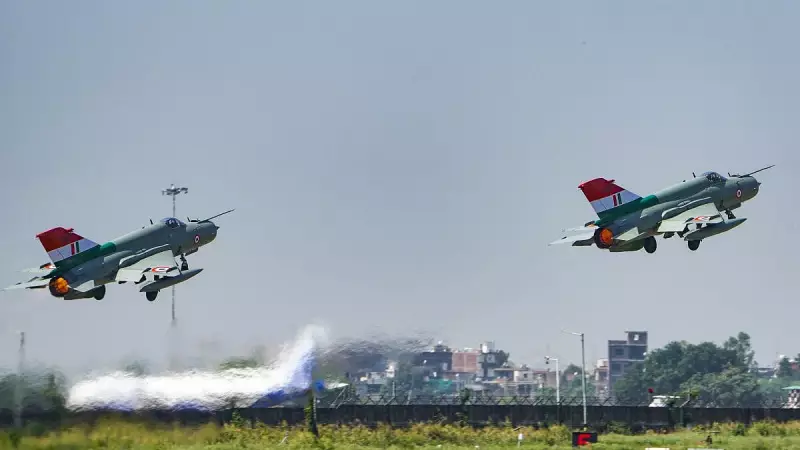
The skies over India will no longer hear the distinctive roar of a legendary guardian. In a ceremony marked by solemn pride and nostalgia, the Indian Air Force officially retired its venerable MiG-21 fighter jet. The event unfolded at the Chandigarh Air Base, which was adorned in ceremonial splendour to honour an aircraft that served as the nation's aerial sentinel for more than sixty years.
A Ceremonial Goodbye to an Aerial Workhorse
The retirement ceremony was a poignant moment for the armed forces and aviation enthusiasts alike. The MiG-21, often dubbed the "flying coffin" in its later years due to a high accident rate, was also celebrated as a formidable defender that shaped India's air combat history. For decades, it formed the backbone of the Indian Air Force's fighter fleet, instilling confidence and projecting power.
Journalist Hari Arayammakul captured the significance of the event, noting the mix of respect and emotion in the air. The last updated timestamp for his report was 09 January 2026, at 00:46 IST, marking the definitive end of an era. The aircraft, which first entered Indian service in the early 1960s, witnessed multiple wars, countless patrols, and the evolution of aerial warfare.

The Legacy of the MiG-21 in Indian Defence
The MiG-21's journey in India is a story of resilience and adaptation. Originally designed in the Soviet Union, India became one of its largest operators. The jet was licensed for local production, which bolstered the country's domestic defence capabilities. Over its long service life, the aircraft underwent numerous upgrades to keep it combat-relevant, a testament to its robust design.
Its roles were diverse and critical:
- Primary interceptor during conflicts.
- A key platform for training generations of Indian fighter pilots.
- A symbol of India's strategic partnership with the former USSR and later Russia.
However, its operational history was also marred by a troubling number of crashes, leading to public and parliamentary scrutiny. This duality—of being both a revered warrior and a challenging machine to operate—defined its later years.
Clearing the Decks for a Modern Air Force
The retirement of the MiG-21 is not merely an emotional farewell; it is a strategic necessity. The ceremony at Chandigarh signifies a pivotal shift in the Indian Air Force's modernization drive. The phase-out of this ageing fleet makes way for more advanced, safer, and more capable aircraft like the Rafale, Tejas, and other future platforms.
This transition is crucial for maintaining India's air superiority in the region. It represents a move from a maintenance-intensive fleet of older technology to a more reliable and lethal force. The void left by the MiG-21 will be filled by jets equipped with modern avionics, weaponry, and survivability features, ensuring that the sentinel of India’s skies remains ever-vigilant, albeit in a new form.
The final flight and ceremonial grounding mark the closing of a monumental chapter. As the sun set on the MiG-21 at Chandigarh, it rose on a new era for the Indian Air Force, one built on the foundation laid by this iconic fighter jet and the pilots who flew it.