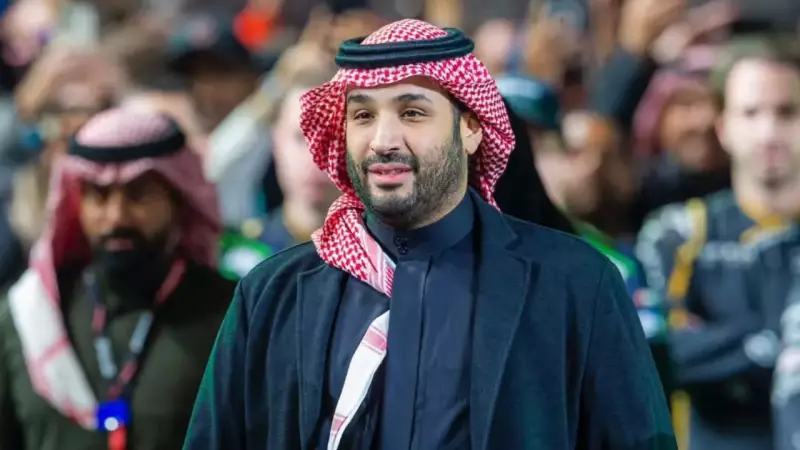
MBS: The Unmatched Power of Saudi Arabia's Crown Prince in Gulf Politics
The Gulf region has transformed dramatically. Once seen as a quiet area dominated by oil wealth and traditional monarchies, it now buzzes with economic ambition, shifting alliances, and strong personal leadership. At the heart of this change stands Mohammed bin Salman Al Saud, known widely as MBS. As Crown Prince of Saudi Arabia, he commands attention far beyond his country's borders.
The De Facto Ruler of Saudi Arabia
Mohammed bin Salman is not merely the heir to the throne. He acts as the kingdom's true ruler, holding unprecedented control over political, economic, and security matters. Officially, he serves as Crown Prince, Prime Minister, and Chairman of the Public Investment Fund. These positions allow him to shape Saudi policy both domestically and internationally with singular authority.
Saudi Arabia remains the most populous and economically significant Gulf state. Its vast oil reserves have influenced global markets for generations. Riyadh's strategic importance continues to grow as it pushes to diversify its economy and expand political influence. Unlike many other Gulf monarchs, MBS manages both political and economic levers of the state. He oversees domestic governance, defense, foreign diplomacy, and investment decisions directly.

Economic Power Through the Public Investment Fund
One key tool of his influence is the Public Investment Fund. Valued at nearly a trillion dollars, it ranks among the world's largest sovereign wealth funds. Under MBS's supervision, the PIF drives Saudi economic policy aggressively. It funds mega-projects like NEOM and directs multi-billion-dollar investments into global industries. This financial strength grants MBS influence well beyond Saudi Arabia. He can shape international business trends and build strategic partnerships with ease.
Consolidating Power: The 2017–2019 Purge
MBS's consolidation of power within Saudi Arabia highlights his dominance clearly. In late 2017, he orchestrated a sweeping purge targeting key figures in the Saudi establishment. The operation included senior princes, ministers, and business elites. Labeled an anti-corruption drive, it dramatically centralized authority in the Crown Prince's hands. Powerful rivals from rival family factions found themselves sidelined.
This move broke sharply from the traditionally consensus-driven politics of the House of Saud. Previously, power spread across extended family networks and senior princes. By rapidly gaining control over security forces and economic institutions, MBS positioned himself as the principal decision-maker. He transcended the conventional ceremonial role often associated with Gulf heirs.
Comparing Gulf Power Centers
To understand MBS's relative strength, we must compare him with his counterparts in the Gulf Cooperation Council.
Mohammed bin Zayed Al Nahyan (MbZ), UAE - Sheikh Mohammed bin Zayed of the United Arab Emirates stands as MBS's most visible peer and sometimes counterweight. As President of the UAE and ruler of Abu Dhabi since 2022, MbZ has shaped Emirati domestic and international strategy for years. He applies a blend of economic diversification, assertive foreign policy, and strong security posture. Historically, MbZ acted as a mentor to the younger MBS, helping secure regional backing for his leadership path. However, recent geopolitical developments have strained their partnership. Competition over influence in Yemen, Sudan, and oil markets has turned it into a rivalry of interests. Analysts note that while the two leaders once aligned against common threats, their visions for Gulf leadership now diverge increasingly. The UAE under MbZ retains formidable soft and hard power. It shows strong economic performance, global investment outreach, diplomatic ties with Western capitals, and active engagement in Africa and Asia. Yet MbZ's influence operates within a smaller geopolitical footprint than Saudi Arabia's. He does not command a comparably sized sovereign fund or the religious symbolism tied to Saudi leadership of Islam's holiest sites.

Qatar's Emir - Qatar's ruling Al Thani family wields influence disproportionate to the country's small size. Doha uses strategic media like Al Jazeera, savvy diplomacy, and hosting major global diplomatic initiatives effectively. It has carved a niche as a mediator in conflicts and a hub for international negotiation. However, in traditional geopolitical and economic terms, Doha's reach remains more qualitative than comprehensive. When Saudi Arabia and the UAE led a blockade against Qatar in 2017, analysts highlighted the power imbalance clearly. Resolution of the crisis required substantial concessions by Doha. This dynamic reflected Riyadh's dominant position within the GCC, even as Doha maintained independent diplomatic leverage.
Kuwait, Bahrain and Oman - These smaller GCC states play stabilising roles but do not project power on the same scale as Riyadh or Abu Dhabi. Kuwait's ruling family exercises significant influence domestically, yet its foreign policy stays traditionally cautious. Oman frequently positions itself as a neutral mediator in regional disputes. Bahrain, while strategically aligned with Saudi Arabia, lacks independent influence outside the GCC security framework.
Global Influence and Strategic Relationships
MBS's power also reflects international alignments and global strategic relationships. Saudi Arabia under his leadership maintains deep ties with the United States. Recent engagements involve arms cooperation, economic partnerships, and diplomatic coordination on Middle East security issues. Leaders in Washington continue to regard Riyadh as a key interlocutor concerning Iran, energy markets, and regional stability.
Simultaneously, Riyadh pursues diversified relations actively. It strengthens ties with China and Russia, participates in OPEC+ energy diplomacy, and engages with emerging economies across Asia and Africa. This multipolar approach enhances Saudi leverage in global politics far beyond its oil exports.
Critiques and Constraints
Despite his power, MBS faces significant challenges both external and internal. His foreign policy in Yemen and elsewhere has drawn criticism for humanitarian costs and strategic setbacks. Domestically, critics highlight human rights concerns and a political climate that suppresses dissent. These dynamics complicate Saudi Arabia's global image even as they reinforce centralized control.
Moreover, the ambition to transform Saudi society and diversify its economy through Vision 2030 requires sustained social support and economic resilience. This is not a given in a rapidly changing world.
The Dominant Figure in Gulf Politics
In 2026, Mohammed bin Salman stands as arguably the most powerful individual among Gulf royals. He combines state authority, economic control, and geopolitical influence in ways his peers cannot match. His leadership defines itself through consolidation of power inside Saudi Arabia, strategic use of vast financial resources, bold foreign policy initiatives, and efforts to position Riyadh at the center of both Islamic and global political orders.
Yet this dominance coexists with dynamic rivalries, particularly with the UAE's Mohamed bin Zayed. Strategic complexities ensure Gulf politics remain fluid and fiercely contested. As the region grapples with shifting alliances, energy transitions, and global power recalibrations, the balance of influence among Gulf royals will continue to shape not only Middle Eastern geopolitics but also broader patterns of international engagement.